

Home / Cities / Michigan / Saginaw

Plumbing Services in Saginaw, MI

A metro's plumbing is a portrait of its building history under its weather, and Saginaw's portrait is painted below from its own records: Census housing figures, NOAA climate normals, the metro's ZIP codes and communities. PlumbReach USA's role is the connection to a local professional; the portrait is here so that connection starts from understanding rather than urgency.

Call center hours: Mon-Fri 7:00 AM-10:00 PM ET | Sat 8:00 AM-10:00 PM ET | Sun 7:00 AM-9:00 PM ET

19
ZIP codes covered
1
County in the metro
77,586
Households (Census ACS)
1968
Median year home built
Saginaw, MI — the metro skyline and landscape
Saginaw, MI — plumbing help across the metro
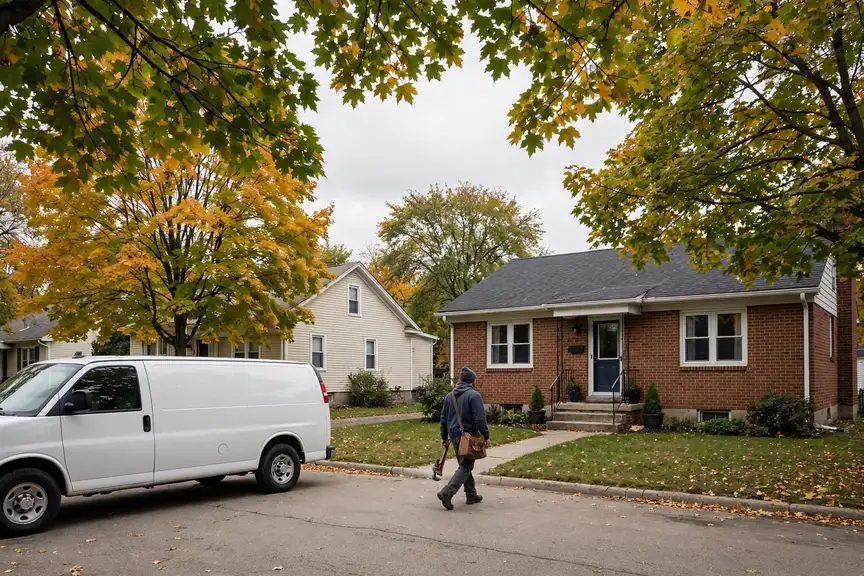
A local plumber's van on a residential street
Local plumbers serving Saginaw neighbourhoods
Water heater installation in a home garage
Replacing a heater in a Saginaw home

Saginaw plumbing, in brief

The median Saginaw home was built in 1968; 72.1% of the stock predates 1980, and the pattern this metro's own data ranks first is ageing cast iron sewer lines. PlumbReach USA is a referral service, not a plumbing company: one call connects you with an independent local plumber serving your ZIP code.

The Saginaw housing stock, and what it means for plumbing

Saginaw is a metro of 189,210 people and 77,586 households, and its plumbing is a portrait of its building history. The median home here was built in 1968; 72.1% of homes predate 1980 and 38.7% predate 1960, while 11.3% have arrived since 2000. Every one of those eras plumbed differently — different pipe materials, different drain designs, different fixtures — and they fail differently, which is why this page is organised around the patterns the data actually produces in Saginaw rather than plumbing in the abstract.

The pre-1980 stock is where most of the metro's plumbing character lives. Homes from those decades in Saginaw County and across Saginaw were built with galvanized supply lines, cast iron or clay drains and first-generation fixtures, and each of those materials is now at or beyond the age its makers expected of it. Owner-occupiers hold 73.5% of the metro's homes, so most of the people reading this page are reading about a system they own outright — one whose failures arrive as surprises only if nobody has looked at the pattern: pressure fading a little each year, a drain that needs attention a little more often, a heater that recovers a little more slowly.

Uniformity is the newer stock's defining trait. A subdivision in Freeland or Shields went up in a handful of years, fitted with one generation of fixtures, one heater model class, one approach to running lines under slabs. That uniformity writes a calendar the whole street shares: the first heater wave, the first cartridge wave, the first questions about lines under concrete arrive together, years before the same streets need anything structural. With 11.3% of the metro built since 2000, that calendar governs a large and growing share of Saginaw's plumbing work — predictable work, if a household reads the calendar early.

The weather's part in this is written at SAGINAW MBS INTL AP, MI US, where an average year carries 32.12 inches of precipitation, 8.7 days at ninety degrees or more and 138.6 nights at freezing or below. Pipes experience that year as workload and as hazard in roughly equal measure — the workload in the heater's cycle count and the drains' burden, the hazard in the exposed runs and the swelling soil. The problem ranking further down is simply the housing profile above, read under this sky.

The Saginaw plumbing profile in numbers

Two public records, one metro: what was built here, and what the sky does to it.

Lay the eras side by side instead: 38.7% pre-1960 (33,334 homes), 33.4% from 1960-1979 (28,769), 16.7% from 1980-1999 (14,384), and 11.3% since 2000 (9,733). No single era tells the story — the proportions among them do, and those proportions are different in every metro this site covers.

This is, by the numbers, an old-system metro. The largest slice of its housing predates 1960, which means the typical serious job here involves materials in their seventh decade or beyond: drains of cast iron or clay, supply runs in galvanized steel, laterals laid when the streets themselves were young. The newer bands exist — the growth since 2000 is real — but they are the supporting cast. Saginaw's plumbing identity was fixed by its earliest builders, and its problem list is written in their materials.

Close behind the leader come the 1960-1979 homes, 33.4% of the stock. Their plumbing is mid-change by construction — the decades when materials swapped over mid-stream — so this band is where a Saginaw plumber earns the diagnostic fee: pressure tests and camera runs that say which side of the transition a given house was built on.

The climate column of this profile is a workload statement. 6,781 heating degree days say how long the cold half of the year keeps inlet water near its chilliest and heaters firing at their hardest; 631 cooling degree days say how relentlessly the hot half loads every drain and tank; 138.6 freezing nights and 8.7 hot days mark the extremes where the failures concentrate. NOAA keeps these figures at SAGINAW MBS INTL AP, MI US as thirty-year normals — which is to say, as the closest thing plumbing has to a settled forecast.

A profile is only useful if it predicts something, and this one predicts the shape of a plumbing diary in Saginaw: which streets will call about drains, which about pressure, which about heaters, and in which months. Everything after this section is that prediction written out as services, problems and answers — the numbers first, the narrative second, the way the evidence actually runs.

Plumbing problems Saginaw homes actually get

Chosen by this metro's own housing and weather data — the same two records this whole page is built from.

Ageing cast iron sewer lines

Iron drains do not fail the way modern pipes fail. Plastic cracks; iron thins, roughens and narrows from within, wall by wall, until the smooth bore the installer left is a reef of corrosion products that catches everything the household sends down. In Saginaw, that reef is growing under the oldest streets in the metro — the homes around Saginaw plumbed when iron was the only serious choice. A line in this condition can serve for years in a diminished way, draining slowly, complaining occasionally, which is exactly how it escapes attention until the day it stops entirely.

There is a temptation to judge an old drain by its kindest day. On its kindest day it still clears, still serves, still seems to argue for another year. Judge it instead by its trend: clearings that come closer together, a tub that drains slower each season, a smell that returns after rain. In the 33,334 pre-1960 homes across this metro, that trend is the pipe's biography being read aloud — corrosion does not pause between visits, and the homes that fare well are the ones whose owners believed the early chapters.

Put a number on it locally: roughly 33,334 homes in the Saginaw metro were built before 1960, when cast iron was the default drain material — and cast iron installed then has now been underground for six decades or more. Not every one of those lines has failed, and plenty test sound on a camera, but the population of pipes at risk here is counted in the tens of thousands of homes, which is why this pattern sits where it does on this page.

Watch for

  • Floor drains in the basement or ground floor backing up during heavy use
  • A sewer smell near drains that cleaning does not shift
  • Patches of lawn staying green or soggy over the line's path

About sewer line repair & replacement ➔

Galvanized pipes at the end of their life

There is a diagnostic shortcut for galvanized systems, and it is a white bucket. Fill it at a tap after the house has sat quiet overnight: the first draw runs tea-coloured with the rust the lines have shed, clearing as fresh water arrives. It is a small experiment with a large meaning — the pipe's interior is dissolving into the water it carries. Across Saginaw, homes plumbed in the galvanized decades run that experiment daily whether they look at the bucket or not. One home's result is a curiosity; the same result with falling pressure and returning leaks is the material's resignation letter.

The geography of galvanized failure inside one house is uneven, and the unevenness misleads people. The runs nearest the water heater corrode fastest, worked by heat; long horizontal runs narrow differently from vertical risers; the line to a little-used guest bathroom may be nearly closed while the kitchen still flows. This is why a Saginaw home can seem fine at most taps while one shower has given up entirely. Repiping answers the whole geography at once, which is its real argument: not that any single run has failed, but that the system's remaining life is scattered unevenly through every wall, and spot repairs keep buying the shortest-lived section.

Count the exposure from the Census side: the metro's 62,103 pre-1980 homes were plumbed in galvanized's long reign, and the material's failure mode — internal rust, narrowing bore — is a matter of chemistry, not workmanship. The variable is speed; the direction, for every one of those systems still original, is settled.

Watch for

  • Water running rusty-brown first thing in the morning, then clearing
  • Pressure noticeably weaker at the far end of the house than near the meter
  • Neighbours on the same street reporting the same slow decline

About pipe repair & repiping ➔

Freeze-burst pipes in cold snaps

The freeze finds the same houses every year, and the reason is architectural rather than meteorological. Somewhere in each of those homes a water line leaves the heated envelope: across a crawl space ventilated to the winter, along an exterior wall whose insulation stops at a corner, up through a garage ceiling. Saginaw's record at SAGINAW MBS INTL AP, MI US — 138.6 nights at or below freezing in an average year — guarantees the audit happens; the architecture decides who fails it. Repairing the burst without correcting the exposure simply re-enrols the house for next winter's sitting.

A burst pipe is rarely about the coldest night of the year; it is about the one unprotected run of pipe the cold can reach. Water expands as it freezes, and the pressure that splits a line is not the ice itself but the water trapped between the ice blockage and a closed tap. Lines in exterior walls, unheated crawl spaces, garages and hose bibbs are the usual victims — the places where a home's heating never quite arrives. Saginaw's older housing carries more of these runs than its newer builds, which route water through conditioned space by design. The thaw is when the damage shows: the split may weep for hours before anyone is home to hear it, which is why the shutoff advice on this page matters more than any repair.

Local exposure, stated plainly: a large stock of homes plumbed before freeze protection was designed-in, standing in a climate that freezes on 138.6 nights a year. Either figure alone is unremarkable; together they describe a metro where burst lines are a seasonal category of call, not an anomaly.

Watch for

  • A tap that runs slower after a cold night than it did the evening before
  • Frost visible on an exposed section of pipe in the garage or crawl space
  • A water bill spike in the month after a hard freeze

About pipe repair & repiping ➔

Winter pipe season in Saginaw

This is the season the metro's housing stock is examined by the weather, and the examination is practical: every exposed run, every unheated void, every shutoff nobody has tested. The failures arrive in batches behind the hardest nights and announce themselves at the thaw. The rest of the season grades the slower systems too — heaters working against the coldest incoming water of the year, laterals under frozen ground — but the headline the season writes, year after year, is the sound of water in a wall that should be dry.

The numbers behind the season here: 138.6 nights a year at or below freezing at SAGINAW MBS INTL AP, MI US, against a housing stock whose median build year is 1968. Every winter writes the same exam for Saginaw's older pipes, and every winter some of them — usually in the the 1960s districts first — fail it.

A closer look: ageing cast iron sewer lines in Saginaw

There is a reason this pattern tops so many old-metro lists, and Saginaw holds the reason in bulk: iron was simply what drains were, for the whole first age of indoor plumbing. Every pre-1960 home still on its original line — and the Census counts 33,334 pre-1960 homes here — is running an experiment in how long buried iron can serve. The results arrive unevenly: one street's lines camera clean and sound, the next street's flaked to lace. That unevenness is why the deep-dive ends in a camera rather than a conclusion, and why two neighbours with identical houses can honestly need different work.

The numbers underneath it, for Saginaw: 86,134 housing units, a median build year of 1968, and a climate record at SAGINAW MBS INTL AP, MI US of 6,781 heating degree days against 631 cooling degree days. Cross the housing record with the weather record and this pattern is what falls out at the top — rarely the most dramatic problem in plumbing, but the one this metro's stock and climate manufacture most steadily.

Experienced local practice starts with the simple certainties — the observations that take minutes and decide the most:

  • Whether the line has ever been camera-inspected, and what the last footage showed
  • The cleanout's condition — standing water there tells its own story
  • Which fixtures misbehave first, since the ground-floor ones report a main-line problem earliest
  • The age of the street's housing, because neighbouring lines of the same era fail in sequence

Plumbing services in Saginaw

Ordered by what this metro's data says its homes need most.

Sewer Line Repair & Replacement in Saginaw

Between the house and the street lies the lateral — privately owned, commonly forgotten, and the source of the worst backups a home can have. Sewer work begins with a camera survey of that run: its material, its fall, its invaders. Spot repairs suit local damage; a line failing along its length gets replaced, not patched into a subscription.

The camera footage is where Saginaw's sewer conversations get honest. From the surface, a backup is a backup; on the screen, the metro's whole history is visible — clay joints shouldered apart by decades of soil movement, cast iron scaled to half its width, a plastic line in a newer subdivision bellied where its bedding settled. Saginaw County's older laterals and the growth areas' young ones fail in their own dialects, and the repair that follows the footage — sectional, partial, or the full run to the street — is the one the pipe itself argues for. With a median build year of 1968, most of the metro's 86,134 housing units are working through the same ageing curve.

Sewer demand follows the founding map: the districts built first, around the old centre and out through Freeland, hold the jointed clay and iron; the growth rings hold plastic with decades in hand. 38.7% of the metro's homes stand on the founding side of that line, which is why the footage here so often shows a pipe at the end of its story.

More about sewer line repair & replacement ➔

Pipe Repair & Repiping in Saginaw

Every pipe material carries a lifespan, and pipe services are how a house changes generations. Sectional repair buys time on a sound system; full repiping retires a tired one, replacing choked or pitting lines wall by wall and leaving the household with pressure and water quality it may not have had in years.

Every pipe in Saginaw is in one of three conditions: new enough to forget, old enough to watch, or old enough to be living on borrowed time. The stock's distribution across those conditions is the metro's building history restated — the pre-1980 districts deep in the third condition, the growth corridors still in the first — and pipe services are how individual homes move between them. A repair returns a watched system to service; a repipe promotes a borrowed-time system back to the first condition wholesale, at a stroke, for another generation. The assessment that chooses between them is short, physical and evidenced: pressure, water colour, and the repair history in the walls. Locally the workload concentrates where the stock is oldest — the districts built around the 1960s first.

Pipe work divides by era in this metro with unusual neatness: renewal conversations in the 62,103 pre-1980 homes, sectional repairs in the middle ring, and near-silence from the 9,733 post-2000 homes whose lines are still young. A call from Bridgeport can sit in any of the three bands; the home's build year says which before the door opens.

More about pipe repair & repiping ➔

Water Heater Repair & Installation in Saginaw

From Saginaw to Bridgeport, the heater question is the same — repair the unit or renew it — and the honest answer starts from its age against Saginaw's demand record, which this page sets out.

More about water heater repair & installation ➔

Emergency Plumbing in Saginaw

In Saginaw the emergency call is routed, not queued: one number reaches the independent local plumber covering Saginaw at that hour, and the housing record on this page — median build year 1968 — is the homework they arrive already knowing.

More about emergency plumbing ➔

Drain Cleaning in Saginaw

Across Saginaw, drain calls follow the building map: iron and clay near the old core around Saginaw, plastic at the growth edge — one service, two different crafts, both covered by the routing on this page.

More about drain cleaning ➔

Leak Detection & Repair in Saginaw

Leak detection in Saginaw is instrument work over local knowledge: acoustic and thermal tools, aimed first at the districts this page's data flags — the pre-1980 stock and the slab tracts out toward Shields.

More about leak detection & repair ➔

Toilet Repair & Installation in Saginaw

Running, rocking or refusing — in Saginaw the diagnosis is the same short sequence: fill valve, flapper, supply line, flange. The plumbers routed here carry the internals for the fixtures this metro's eras installed.

More about toilet repair & installation ➔

Faucet, Fixture & Garbage Disposal Repair in Saginaw

Fixture work in Saginaw divides by era like everything else on this page: washer-era taps in the older districts, cartridge internals in the post-2000 subdivisions — the local plumber stocks for both.

More about faucet, fixture & garbage disposal repair ➔

What Saginaw books most

If this page's services were ranked by Saginaw's call patterns rather than listed in catalogue order, they would come out much as they do here — because the ranking behind them is data, not habit. Ageing cast iron sewer lines leads the metro's problem table and galvanized pipes at the end of their life follows, so the services answering them lead the list. The long tail of a metro's plumbing life — fixture failures, toilet calls, the single unexplained leak — fills in the diary around them, here as everywhere.

From problem to fixed, in Saginaw

A plumbing problem inside a Saginaw homePROBLEM
➔
The same system in Saginaw after professional repairSOLUTION

Areas covered in the Saginaw metro

Saginaw

Population 43,879

Freeland

Population 7,562

Shields

Population 7,276

Bridgeport

Population 6,841

Buena Vista

Population 5,904

Frankenmuth

Population 5,108

Chesaning

Population 2,411

St. Charles

Population 1,857

Zilwaukee

Population 1,696

Burt

Population 1,430

Hemlock

Population 1,323

Birch Run

Population 1,236

Also in the Saginaw metro: Merrill (population 825), Robin Glen-Indiantown (population 545).

A metro is a federation of building decades wearing one name, and the grid above is Saginaw's federation: Saginaw at the centre, Freeland (7,562 residents) and Shields (7,276) in the next ring, and the smaller communities beyond, down to places a few thousand households deep. What unites them is one climate record and one routing; what divides them is the year their streets were plumbed. The ZIP list that follows is the practical definition of that federation — if your code is on it, your home's era is part of the data this page was built from.

The map continues: Bridgeport (6,841), Buena Vista (5,904), Frankenmuth (5,108), Chesaning (2,411), St. Charles (1,857). Different names, different decades — each community in Saginaw was plumbed in its own growth years, which is why two streets in the same metro can need entirely different plumbing conversations. The ZIP list below is the working definition of coverage; the housing behind each code is the working definition of the job.

Saginaw ZIP codes we cover

48415, 48417, 48601, 48602, 48603, 48604, 48607, 48609, 48614, 48616, 48623, 48626, 48637, 48638, 48649, 48655, 48722, 48724, 48734

The Saginaw metro in detail

Every metro has a first city and a supporting cast, and the census figures draw the billing plainly here: Saginaw first, with 43,879 residents; Freeland second at 7,562; Shields third at 7,276; then the long tail of smaller communities in the grid above. The billing matters less than the building dates — each of these places was plumbed in its own decade, by its own builders — but between them they account for nearly every housing era, material and failure pattern this page describes.

One metro, 1 county lines drawn through it: Saginaw. The lines are invisible to the water and the weather, but they structure everything administrative around a plumbing job — which office permits it, which inspector signs it, which code edition applies. Saginaw County, at the centre, carries the oldest housing and the heaviest share of the work this page describes; its neighbours carry the growth. A routed local plumber navigates the patchwork so the homeowner does not have to.

This page ends at the metro boundary, but the region does not: Flint, MI, Lansing, MI and Detroit, MI continue the coverage in their own directions, each with a profile built from its own Census and NOAA figures. If your home sits near the line between metros, go by your ZIP code — it places you in the dataset that describes your housing.

The region around Saginaw is a set of variations on its theme: Flint, MI, 28 miles off, runs a median build year of 1969 on a metro population of 401,093; Lansing, MI (51 miles) medians 1973 on 479,722; Detroit, MI (60 miles) medians 1968 on 4,390,913. Nearness is not sameness — a few decades of median build year separate their plumbing as surely as the miles separate their maps.

Count the metro per unit of itself: 4,533 housing units per covered ZIP code; 77,586 households per county; 14 communities sharing 1 county governments. Then weigh the generations against each other — 6.4 older homes for each newer one — and the service pattern on this page stops being a list and becomes a proportion: that much of the diary written by ageing systems, the rest by young ones wearing in.

The Saginaw record in one line — median home age: 58 years · owner-occupied homes: 57,026 · renter-occupied homes: 20,560 · pre-1960 homes per covered ZIP code: 1,754 · heating-to-cooling degree-day ratio: 10.75 · average rainfall: 816 mm a year.

Saginaw plumbing questions

What area does PlumbReach USA cover around Saginaw?
Coverage follows the metro's own map: 19 ZIP codes across Saginaw, anchored on Saginaw and running out through Freeland, Shields and Bridgeport. The list printed on this page is the working boundary — inside it, one call routes you to an independent local plumber who serves your street. One measure of the footprint: Saginaw accounts for 23.2% of the metro's people, and the remaining share spreads across the communities in the grid — every one of them plumbed in its own decade, every one of them a single call from a local professional. The boundary is worth stating in numbers: 77,586 households, a median build year of 1968, and a climate record kept at SAGINAW MBS INTL AP, MI US — the coverage and the data describe the same ground. The ground inside that boundary holds 86,134 housing units — 33,334 from before 1960, 28,769 from 1960-1979, 9,733 since 2000 — under the climate record kept at SAGINAW MBS INTL AP, MI US. Stated as the stock it covers: the era ledger reads 33,334 homes before 1960, 28,769 from 1960-1979, 14,384 from 1980-1999 and 9,733 since 2000 — 86,134 units, 77,586 households, 73.5% of them owner-occupied.
My Saginaw home was built around 1968. What plumbing should I be watching?
Age shows in a predictable order here. Supply lines and shutoff valves from the the 1960s tire first, then drain joints, then the fixtures themselves. Saginaw's figures explain the queue: a median build year of 1968 means half the metro's homes are older than yours or the same age, all ageing on the same schedule. The pattern matters more than any single fault — sequential leaks in the same material are the classic signal. In Saginaw that plays out across 19 ZIP codes, from Saginaw to Freeland. The same watch-list runs metro-wide: from Freeland (7,562 residents) to Shields (7,276) and Bridgeport, across Saginaw, the 62,103 pre-1980 homes share the materials this answer describes — which is why a neighbour's leak two streets away is worth a homeowner's attention here. Scale explains the pattern: 86,134 housing units share this stock profile, and the 28,769 homes of 1960-1979 alone outnumber the entire housing stock of most smaller metros. Set against the climate that works on them — 6,781 heating degree days, 631 cooling degree days, 32.12 inches of rain at SAGINAW MBS INTL AP, MI US — the era of a Saginaw home is the strongest single clue to the condition of its plumbing. Where the watching happens, in figures: the community ledger reads Saginaw (43,879 residents), Freeland (7,562), Shields (7,276), Bridgeport (6,841) and Buena Vista (5,904), out of 189,210 residents metro-wide — one timetable of ageing systems across all of them.
What fills a Saginaw plumber's diary more than anything else?
Ask the data and it points at ageing cast iron sewer lines. Iron drains do not fail the way modern pipes fail. The ranking on this page is rebuilt for every metro from its own Census and NOAA figures, so the problem at the top here is the one Saginaw's homes, specifically, produce most. The backdrop is the same metro-wide: 86,134 housing units working against the SAGINAW MBS INTL AP, MI US climate record. The ranking's local weight: Ageing cast iron sewer lines sits on top because the stock manufactures it — 62,103 pre-1980 homes, 8.7 hot days and 138.6 freezing nights a year at SAGINAW MBS INTL AP, MI US, all pressing the same systems. The full scoring line for Saginaw: Ageing cast iron sewer lines first, galvanized pipes at the end of their life second, then the rest — computed over 86,134 housing units, 8.7 hot days, 138.6 freezing nights and 32.12 inches of rain. The inputs behind the ranking, code by code: the codes run 48415, 48607, 48637, 48734 and 48649 among the 19 on the list, spread over Saginaw.
Which parts of my plumbing does the Saginaw weather actually touch?
Mostly through the ground. Buried lines do not experience weather as temperature; they experience it as soil — soil that swells with Saginaw's 32.12 inches of average rainfall, shrinks back in the dry stretches, and shifts the joints of every lateral in the metro a fraction at a time. Above ground, the same record works on exposed pipework and heaters. The climate is not a detail on this page; it is half the evidence. The figures behind that answer, from the station record: a yearly average of 48.0 degrees, 32.12 inches of precipitation, 8.7 days at 90 or above and 138.6 nights at freezing or below — the four numbers this page's seasonal section is built from. It is the same story from Freeland to Shields — the stock decides, and this stock's median build year is 1968. That is the metro-wide version; the household version differs by exposure — a shaded lot in Freeland, an open slab in Shields (7,276 residents), a crawl space in Bridgeport — but the loads themselves, 6,781 heating degree days against 631 cooling, are the same sky over every roof in Saginaw. The figures are worth keeping with the house papers: 48.0 degrees as the yearly average at SAGINAW MBS INTL AP, MI US, 32.12 inches of precipitation, and a housing stock whose median year is 1968 — the three numbers this metro's plumbing lives by. Filed with the record: SAGINAW MBS INTL AP, MI US also logs the extremes the averages hide — and the stock it falls on runs to 62,103 pre-1980 homes out of 86,134 units, spread from Saginaw to Bridgeport. The stock under that sky, counted: the era ledger reads 33,334 homes before 1960, 28,769 from 1960-1979, 14,384 from 1980-1999 and 9,733 since 2000 — 86,134 units, 77,586 households, 73.5% of them owner-occupied.
I can hear water running inside a wall at my Saginaw home. First move?
Shutoff first, questions later. In most Saginaw homes the main valve sits by the meter or where the supply line comes through the wall; turn it, open the tap at the bottom of the system to drain the lines down, and move anything water-soluble out of the wet zone. Sewage changes the rules — keep people and pets out of it entirely — and the smell of gas means leave and call from outside. Across the metro's 1 counties, Saginaw County included, the pattern repeats wherever the housing matches. One metro, two shutoff geographies: the pre-1980 districts around the centre and out in Freeland run interior valves, while the slab subdivisions through Shields run meter boxes at the street. The 77,586 households in Saginaw divide between them, and the calm-day version of this emergency is learning which one your home has. The calm-day homework for this metro: walk the 19 covered ZIP codes' worth of housing in your mind to your own valve — in Saginaw County the older stock hides it indoors, the slab tracts past Shields at the meter — and turn it once before you ever need it in anger. The calm-day version, localised: find your valve before SAGINAW MBS INTL AP, MI US's next freeze season — 138.6 freezing nights a year — whether your home sits near Saginaw, out in Freeland (7,562 residents) or past Shields (7,276). True from the centre to the edge: the community ledger reads Saginaw (43,879 residents), Freeland (7,562), Shields (7,276), Bridgeport (6,841) and Buena Vista (5,904), out of 189,210 residents metro-wide — shutoff first, everywhere on the map. And if the call goes out, the geography that frames it: Saginaw sits 28 miles from Flint, MI, 51 miles from Lansing, MI and 60 miles from Detroit, MI — three neighbouring metros, three different housing stocks, none of them the stock inside your walls. Learn it street by street if you must: the 48734 subdivisions shut off at the meter, the 48649 districts at the wall, the oldest homes out toward 48601 at a curb stop — the map of valves is the map of build decades.
Are older Saginaw homes more likely to need repiping?
The deciding evidence lives in the walls, not in the home's birthday. Cut open one failed section of a Saginaw system from the pre-1980 decades and the bore tells the story: rust scaling the passage down to a fraction of its width predicts the next failure better than any anniversary does. Repairs stay rational while the neighbouring pipe is sound inside; the moment the sample shows the whole material compromised, continued patching is just the repipe arriving in instalments. Homeowners in Freeland (7,562) and Shields (7,276) read this page for the same reason — the stock there is the same stock. The numbers are the metro's own: 77,586 households, 19 ZIP codes, one climate record at SAGINAW MBS INTL AP, MI US. The pattern is not evenly spread: it concentrates in the 62,103 pre-1980 homes, thickest in the founding districts and the first suburbs — the streets around Freeland and the old core — and thins toward Bridgeport and the growth edge, where the stock is a generation younger. Put the metro's numbers to it: 72.1% of homes predate 1980, so the repipe conversation is a standing item here in a way it is not in younger metros — Saginaw simply has more of the defendant material in the ground and in the walls. Streets carry the same ledger at household scale: from Saginaw (43,879 residents) through Freeland (7,562) to Shields (7,276), the leak sequence means the same thing wherever the material matches. Where the pattern concentrates, in codes: the codes run 48415, 48607, 48637, 48734 and 48649 among the 19 on the list, spread over Saginaw, thickest in the earliest-built of them.
Am I hiring PlumbReach USA, or a local Saginaw plumber?
An independent local plumber — not a PlumbReach USA employee. We run the connection service and the call center hours listed on this page; the professional who serves Saginaw runs their own business, sets their own schedule with you, and does the work. We think that arrangement works well when it is stated plainly, so we state it on every page. The local figures behind it: 62,103 homes from before 1980 and 9,733 built since 2000, sharing one system of streets and soil. From Freeland to Bridgeport, the model does not change: PlumbReach USA publishes the homework — this page, built from Saginaw's Census and NOAA records — and routes the call; the independent professional who serves that part of Saginaw does everything at the home. The same plain statement covers the whole metro, from the core around Saginaw to the edge past Shields: information and routing from us, the work and everything that follows from it from the independent professional you hire. Callers from Freeland (7,562 residents), Shields (7,276) and Bridgeport get the same plain arrangement: our routing, their plumber, their terms — stated here because the metro's 189,210 residents deserve it stated. The arrangement holds in every community: the community ledger reads Saginaw (43,879 residents), Freeland (7,562), Shields (7,276), Bridgeport (6,841) and Buena Vista (5,904), out of 189,210 residents metro-wide.
What plumbing checks are worth doing each year in Saginaw?
Build the year around the two stretches that test this metro's plumbing. Ahead of the heat — 8.7 days of it — the heater and the drains. Ahead of the cold — 138.6 freezing nights — the exposed lines and the shutoff. Between stretches, the quiet checks: a meter watched at rest, a cleanout glanced down, valves under sinks turned twice so they remember the motion. In a metro whose median home dates to 1968, that rhythm intercepts most of the emergency diary while it is still a diary of small things. None of it is abstract at this scale: 77,586 households across Saginaw share one climate and one ageing stock, so a yearly rhythm kept by even a fraction of them is the difference between this metro's plumbing failing in private, one house at a time, and failing on a schedule somebody saw coming. The checks travel well because the conditions do: SAGINAW MBS INTL AP, MI US's record covers Freeland, Shields and Bridgeport alike, and the housing eras repeat across all 19 ZIP codes. A neighbour in another district keeping the same calendar is not copying you; they are reading the same data. The calendar's local proof is in the stock figures: 62,103 pre-1980 homes to keep valves alive in, 9,733 post-2000 homes reaching first-fixture age together, and 32.12 inches of rain a year testing every cleanout in Saginaw. The checks are sized to the stock's actual eras — a median build year of 1968, 38.7% of it pre-1960 — not to a generic house that exists nowhere in Saginaw. The routine's households, community by community: the community ledger reads Saginaw (43,879 residents), Freeland (7,562), Shields (7,276), Bridgeport (6,841) and Buena Vista (5,904), out of 189,210 residents metro-wide.
Why does this page lead with the problems it leads with in Saginaw?
By a scoring pass over public data, rebuilt for every metro. Each candidate pattern earns its place from Saginaw's own figures: how much of the stock predates 1980 (72.1%), how much predates 1960 (38.7%), and what the weather at SAGINAW MBS INTL AP, MI US does to systems of those vintages across 8.7 hot days and 138.6 freezing nights a year. Patterns both records support rise; the rest wait further down the list. The ranking's geography is visible in the coverage grid: the patterns at the top of the list concentrate where the old stock does — the core around Saginaw, the first suburbs toward Freeland — while the growth communities past Shields (7,276 residents) pull the ranking's lower half upward year by year. The inputs are on the record: the Census profile of Saginaw — 86,134 housing units, median build year 1968 — and the normals at SAGINAW MBS INTL AP, MI US. Change either input and the order changes; both are this metro's own. Both inputs, printed: Census figures for the Saginaw metro — 189,210 residents, 86,134 housing units — and the NOAA normals at SAGINAW MBS INTL AP, MI US, 6,781 heating degree days set against 631 cooling degree days. The scoring's raw material, era by era: the era ledger reads 33,334 homes before 1960, 28,769 from 1960-1979, 14,384 from 1980-1999 and 9,733 since 2000 — 86,134 units, 77,586 households, 73.5% of them owner-occupied. The full local podium the scoring returns: Ageing cast iron sewer lines, galvanized pipes at the end of their life, freeze-burst pipes in cold snaps — then the rest of the patterns weighed for Saginaw, each scored on this metro's stock and sky alone. The sort ran over the whole list — from 48415 and 48607 through 48637, 48734 and 48649 to 48601 — and returned one order for all of it, because the inputs were the metro's totals, not any single district's.
Which parts of Saginaw have the oldest plumbing?
Start downtown and work out: the streets nearest the old centre of Saginaw hold the deepest plumbing history, the post-war ring around them holds the next layer, and the subdivisions beyond Shields the newest. Age matters because pipe materials have service lives — the closer a street sits to the metro's founding, the more of its original plumbing is living past the life it was built for. It is also a numbers story: of Saginaw's 86,134 housing units, the pre-1960 share is 38.7% — the largest single concentration of original-era pipework in the metro, sitting in the districts where Saginaw County's streets were laid out first. The drive that proves it runs from the centre of Saginaw outward: through Freeland (7,562 residents), then Shields (7,276), then the younger rings toward Bridgeport — a single trip across Saginaw that travels forward through the metro's plumbing history decade by decade. It is why two homes a mile apart in Saginaw can need different conversations: one on the 1960s materials near the centre, one on modern lines past Shields — the map of eras is the first diagnostic. It is a population map as much as a plumbing map: 189,210 residents, 77,586 households, and the oldest pipework concentrated where the earliest of them settled — the founding districts of Saginaw County. The map's communities in growth order: the community ledger reads Saginaw (43,879 residents), Freeland (7,562), Shields (7,276), Bridgeport (6,841) and Buena Vista (5,904), out of 189,210 residents metro-wide. Counted under its Census name — the Saginaw metro, 189,210 residents, 73.5% owner-occupied — the oldest layer is a defined population of homes, not a figure of speech.
What does a plumbing check flag most often in Saginaw homes?
In a metro with a median build year of 1968, the flags repeat: shutoff valves that no longer turn, a water heater living past its anode's protection, drains whose behaviour nobody has tested under full use, and supply lines in the era's original material. The check itself is undramatic — valves exercised, the meter watched, the heater's age read off its plate — but in housing of this age it finds the small failures while they are still small. In Saginaw the walk has local emphases: with 72.1% of homes predating 1980, original-material supply lines earn an extra look, and with SAGINAW MBS INTL AP, MI US recording 138.6 freezing nights a year, the exposed runs earn one too. The order stays the same; the attention follows the data. Across 19 ZIP codes the half hour repeats with the same shortlist and different evidence: a stock of 86,134 homes, 62,103 of them pre-1980, under a record of 6,781 heating degree days — the check reads those numbers home by home. Keep the findings with the house records: in a metro of 77,586 households, the homes whose owners can date their last check are the ones whose failures arrive as appointments — the entire point of the half hour. Kept with the house papers, a Saginaw check reads: shutoff turned, heater age noted, meter still at rest, drains clear — dated against a stock where 72.1% of homes predate 1980 and 138.6 nights a year freeze. The walk's stock, counted before the door opens: the era ledger reads 33,334 homes before 1960, 28,769 from 1960-1979, 14,384 from 1980-1999 and 9,733 since 2000 — 86,134 units, 77,586 households, 73.5% of them owner-occupied.

Before an emergency, read the guide: How to shut off your home's water main

Nearby metro areas

Talk to a Saginaw plumber

One call connects you with an independent local plumbing professional serving Saginaw and the surrounding metro.

Call center hours: Mon-Fri 7:00 AM-10:00 PM ET | Sat 8:00 AM-10:00 PM ET | Sun 7:00 AM-9:00 PM ET

Call Now
