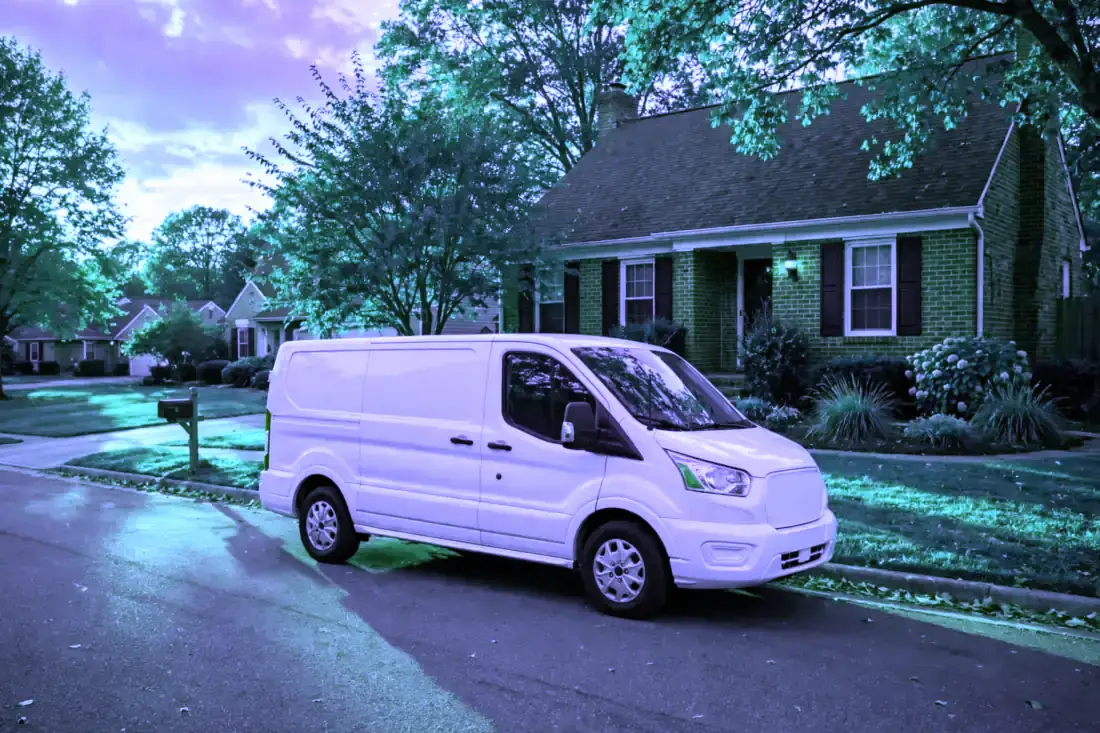


This is Ann Arbor's plumbing page, built from Ann Arbor's own numbers: Census housing figures, the metro's ZIP codes and its NOAA climate record. PlumbReach USA routes your call to an independent local plumber; the homework below is here so you know your home's likely problems before you ever make it.
Call center hours: Mon-Fri 7:00 AM-10:00 PM ET | Sat 8:00 AM-10:00 PM ET | Sun 7:00 AM-9:00 PM ET
The median Ann Arbor home was built in 1978; 52.9% of the stock predates 1980, and the pattern this metro's own data ranks first is ageing cast iron sewer lines. PlumbReach USA is a referral service, not a plumbing company: one call connects you with an independent local plumber serving your ZIP code.
Start with the raw material: 368,394 people, 158,115 housing units, and a housing stock whose middle home was built in 1978. That single date organises everything on this page. On one side of it stand the older districts — 25.2% of homes predate 1960, 52.9% predate 1980 — plumbed in galvanized steel, cast iron and clay, in homes across Washtenaw that have been repaired piecemeal for decades. On the other side, the 20.7% built since 2000 run plastic lines under slabs, and fail in the newer ways. A Ann Arbor plumber reads a home's build year the way a doctor reads a chart: it predicts, before a single wall is opened, which systems deserve suspicion first.
The pre-1980 districts are not a museum; they are most of the metro's working housing, and their plumbing is a patchwork in the literal sense — original runs beside renewed sections, a heater of one decade feeding fixtures of another. Across 83,643 such homes in Washtenaw, no two systems share exactly the same repair history, which is why the guidance below insists on pattern over incident: in patchwork plumbing, what has already been replaced is as diagnostic as what has failed.
There is a second way to read the growth figures: as a maintenance wave still approaching. The 32,730 homes built since 2000 were handed over with everything new at once — heaters, cartridges, supply lines, seals — and new things age in convoy. The first replacements in those subdivisions have begun; the wave behind them is arithmetic. Households in Ypsilanti and the other growth districts who learn their systems now, while the systems are still young, are the ones who will meet that wave as a schedule rather than a surprise.
The weather's part in this is written at ANN ARBOR MUNI AP, MI US, where an average year carries 29.78 inches of precipitation, 10.8 days at ninety degrees or more and 149.5 nights at freezing or below. Pipes experience that year as workload and as hazard in roughly equal measure — the workload in the heater's cycle count and the drains' burden, the hazard in the exposed runs and the swelling soil. The problem ranking further down is simply the housing profile above, read under this sky.
The metro's building eras on one side, its weather record on the other — and its plumbing where the two meet.
Break the stock down by building era and the profile sharpens. Before 1960: 25.2% of homes, roughly 39,845 of them. From 1960 to 1979: 27.7%, about 43,798. From 1980 to 1999: 26.5%, about 41,900. Since 2000: 20.7%, about 32,730. Four eras, four material palettes — and the balance among them is this metro's plumbing character in a single paragraph.
Call this the transition metro. Its biggest band of housing went up between 1960 and 1979, when the trade was mid-change: galvanized on its way out, copper on its way in, drain materials mixed street by street. That mixture is the defining fact — two neighbouring Ann Arbor homes of the same year can hold different systems with different futures, which is why this metro's plumbing rewards inspection over assumption more than most.
Second in the table, the 1980-1999 band: 41,900 homes, 26.5% of the metro. Its systems are mature rather than ancient — copper in its pinhole years in places, plastic drains still sound, first-generation cartridges wearing out in waves — and its plumbing is the schedulable kind: work that rewards being booked before it becomes urgent.
Start the climate half where the water starts: underground. Ann Arbor's laterals rest in soil that takes 29.78 inches of rain in an average year and dries between deluges, swelling and shrinking against their joints through every season. Above ground the same record reads as workload — 520 cooling degree days of hot-water demand, 6,742 heating degree days of cold incoming water at ANN ARBOR MUNI AP, MI US. A plumbing system here is never in neutral; the record keeps it working at one end or the other all year.
A profile is only useful if it predicts something, and this one predicts the shape of a plumbing diary in Ann Arbor: which streets will call about drains, which about pressure, which about heaters, and in which months. Everything after this section is that prediction written out as services, problems and answers — the numbers first, the narrative second, the way the evidence actually runs.
Ranked for this metro alone, from its Census housing profile and NOAA climate record.
Cast iron was the standard sewer material for homes built through the middle of the last century, and Ann Arbor still has a great deal of it underground: 25.2% of homes here were built before 1960 and 52.9% before 1980. Cast iron does not fail all at once. It corrodes from the inside out, the bottom of the pipe thinning and scaling until waste catches on the rough surface, and a line that drained freely for decades starts slowing, then backing up. By the time roots find the joints of an old cast iron line, the pipe wall around them is often too thin for cleaning alone to be the whole answer. A camera inspection shows exactly how much good pipe is left: scaling near the top of the line may clean up well, while a channel rotted along the bottom means that section is living on borrowed time. Homeowners in Ann Arbor with a pre-1960 house and drains that misbehave through the whole home — not just one fixture — are usually looking at this story, and the sensible first step is a camera look before another cleaning is booked.
Look inside an old cast iron line with a camera and the failure stops being abstract. The inner wall grows rough with tuberculation — rust nodules that narrow the bore and catch everything passing. The bottom of the run, where water and grit travel, thins fastest; the top can look sound while the channel below it is nearly through. Roots enter at joints and add their own blockage. A Ann Arbor line of this vintage is therefore not one problem but a profile of problems along its length, and the repair that makes sense — cleaning, a section, a full replacement — is the one matched to the worst ten feet the camera finds, not the average of the whole run.
Put a number on it locally: roughly 39,845 homes in the Ann Arbor metro were built before 1960, when cast iron was the default drain material — and cast iron installed then has now been underground for six decades or more. Not every one of those lines has failed, and plenty test sound on a camera, but the population of pipes at risk here is counted in the tens of thousands of homes, which is why this pattern sits where it does on this page.
When water freezes inside a pipe it expands, and the pressure it creates has nowhere to go: the pipe splits, often at a joint or an elbow, and the damage is done before anything thaws. Ann Arbor winters make this a standing risk rather than a freak event — the long-term climate record at ANN ARBOR MUNI AP, MI US shows about 149.5 nights a year at or below freezing and a heating load of 6,742 degree days, which is why pipes in unheated garages, crawl spaces and exterior walls here live dangerously every cold snap. The split itself usually announces at the thaw, when water returns to the line and finds the opening. Homes in Washtenaw that have frozen once tend to freeze in the same place again, because the exposure that caused it — a vent blowing cold air on a line, insulation that stops short of a corner — is still there. A plumber who repairs a burst pipe here will trace why that run froze and what changes: insulation, rerouting a short section, or sealing the air leak that bathes the pipe in cold air through the coldest nights.
A burst pipe is rarely about the coldest night of the year; it is about the one unprotected run of pipe the cold can reach. Water expands as it freezes, and the pressure that splits a line is not the ice itself but the water trapped between the ice blockage and a closed tap. Lines in exterior walls, unheated crawl spaces, garages and hose bibbs are the usual victims — the places where a home's heating never quite arrives. Ann Arbor's older housing carries more of these runs than its newer builds, which route water through conditioned space by design. The thaw is when the damage shows: the split may weep for hours before anyone is home to hear it, which is why the shutoff advice on this page matters more than any repair.
Two local numbers frame the risk: 149.5 nights a year at or below freezing at ANN ARBOR MUNI AP, MI US, against a housing stock whose median home dates to 1978 — plumbed, much of it, before routing lines away from cold air was standard practice. Exposure is the product of those two numbers, and in this metro the product is large.
A lateral ages in the dark, at the pace of the ground around it. Soil creeps; bedding washes grain by grain toward the street; joints laid generations ago in Ann Arbor's older districts step a fraction out of true and stay there, catching what the household sends down. Nothing about this is dramatic from inside the house — until the day the accumulated fractions add up to a line that no longer falls cleanly to the main. That day announces itself downstairs, at the ground-floor fixture, the way it always has: the private sewer reporting, at last, in public.
A lateral gives decades of silence and then a short conversation. The conversation usually starts with the ground-floor drain in the house and escalates through the cleanout to the camera — and the camera's footage settles every argument about whether the line is blocked or broken. Across Ann Arbor, the laterals entering that conversation now are the ones buried when the metro's median home went up, in 1978. They were built to outlast their mortgages, and they have; the question the footage answers is how much further the same pipe can honestly be asked to go.
The depth of the bench matters locally: this is not a pattern confined to a few old streets. Every district built before modern plastic — the core, the post-war rings, the middle suburbs — holds laterals of the same generations, and the metro's own growth means their combined length runs to thousands of miles of buried, jointed, ageing pipe. The ranking reflects that inventory, nothing more exotic.
This is the season the metro's housing stock is examined by the weather, and the examination is practical: every exposed run, every unheated void, every shutoff nobody has tested. The failures arrive in batches behind the hardest nights and announce themselves at the thaw. The rest of the season grades the slower systems too — heaters working against the coldest incoming water of the year, laterals under frozen ground — but the headline the season writes, year after year, is the sound of water in a wall that should be dry.
Winter's load on this metro can be counted two ways: in the 149.5 freezing nights ANN ARBOR MUNI AP, MI US records, and in the age of the housing that must withstand them — half of it built by 1978 or earlier. Neither number alone predicts a burst; multiplied together, they predict a season. Local plumbers plan their winter around that product, and households in the older districts do well to plan their autumn the same way.
There is a reason this pattern tops so many old-metro lists, and Ann Arbor holds the reason in bulk: iron was simply what drains were, for the whole first age of indoor plumbing. Every pre-1960 home still on its original line — and the Census counts 39,845 pre-1960 homes here — is running an experiment in how long buried iron can serve. The results arrive unevenly: one street's lines camera clean and sound, the next street's flaked to lace. That unevenness is why the deep-dive ends in a camera rather than a conclusion, and why two neighbours with identical houses can honestly need different work.
Read the ranking backwards and it reads as a data summary: 368,394 residents in 158,115 housing units, 25.2% of the housing from before 1960, 29.78 inches of rain in an average year. The pattern leads because the exposure is broad — counted not in individual unlucky houses but in whole eras of the metro's building, stacked one on another.
Experienced local practice starts with the simple certainties — the observations that take minutes and decide the most:
Ordered by what this metro's data says its homes need most.
Between the house and the street lies the lateral — privately owned, commonly forgotten, and the source of the worst backups a home can have. Sewer work begins with a camera survey of that run: its material, its fall, its invaders. Spot repairs suit local damage; a line failing along its length gets replaced, not patched into a subscription.
Put the metro's laterals end to end and they would run for thousands of miles — one private road per home, most of them laid generations ago and none of them inspected since. Ann Arbor's share of that buried network follows its building history: clay and iron under the founding districts, transitional materials in the post-war ring, plastic in the growth corridors around Ypsilanti. Sewer service here is the slow audit of that network, one camera run at a time, and its findings sort themselves by era so reliably that the footage often confirms the street's building date before it confirms anything else. From Ypsilanti to Saline, the pattern repeats wherever the housing era matches.
Sewer demand follows the founding map: the districts built first, around the old centre and out through Ypsilanti, hold the jointed clay and iron; the growth rings hold plastic with decades in hand. 25.2% of the metro's homes stand on the founding side of that line, which is why the footage here so often shows a pipe at the end of its story.
Pipes age by material: galvanized chokes with rust, copper pits into pinholes, early plastic turns brittle. Repair answers the isolated failure; repiping replaces a system whose failures have become a rhythm, rerunning supply lines in modern material while the house stays liveable around the work.
Stand in a Ann Arbor street built in the metro's big decades and you are standing over a synchronised experiment: hundreds of homes plumbed in the same material, by the same crews, in the same years, now ageing in unison. Pipe work here is consequently part diagnosis, part census — the plumber reads one home's failure against the street's pattern and can often say what the neighbouring houses will need next. Sectional repair serves the home whose system is sound elsewhere; repiping serves the street-timer home, where the failures have begun arriving in rhythm and the rhythm itself is the diagnosis. That is the daily reality for the 149,256 households spread across Washtenaw.
Pipe work divides by era in this metro with unusual neatness: renewal conversations in the 83,643 pre-1980 homes, sectional repairs in the middle ring, and near-silence from the 32,730 post-2000 homes whose lines are still young. A call from Whitmore Lake can sit in any of the three bands; the home's build year says which before the door opens.
Heater work in Ann Arbor is workload work: 10.8 hot days and 6,742 heating degree days a year cycle the metro's tanks hard, and the local professionals routed here size, flush and replace against that record.
One call from anywhere in the Ann Arbor metro — from Ann Arbor out to Whitmore Lake — routes to the local professional on cover; the failure patterns they expect first are the ones this page's data ranks.
Across Washtenaw, drain calls follow the building map: iron and clay near the old core around Ann Arbor, plastic at the growth edge — one service, two different crafts, both covered by the routing on this page.
A creeping meter in a Ann Arbor home is located, not guessed at: the professionals routed here trace the line with instruments and confirm the spot before any floor or wall is opened.
Toilet calls in Ann Arbor are the small end of the diary and the most democratic: every era of the 158,115-home stock produces them, and the local fix starts with the mechanism in the tank, not the porcelain.
Drips and disposals across Washtenaw are small jobs with a standard: repair the mechanism where the fixture deserves it, renew it where it does not, and check the shutoffs and supply lines while the cabinet is open.
Bookings in this metro have a centre of gravity, and it sits on the two patterns this page ranks first: Ageing cast iron sewer lines, then freeze-burst pipes in cold snaps. Everything a local service operation does — the vans' stock, the week's scheduling, the order of this very list — bends around that gravity. A homeowner reading the services above is therefore reading something more specific than a menu: a forecast of what a home like theirs, in a metro built like this one, is most likely to need, in the order it is most likely to need it.
 PROBLEM
 SOLUTION
Population 121,179
Population 19,937
Population 8,976
Population 8,083
Population 5,420
Population 4,495
Population 2,375
Population 478
Read the grid as a building programme spread over a century. The oldest communities sit where the metro began; the youngest are still adding streets at its edge; and Ypsilanti and Saline, with 19,937 and 8,976 residents, stand for the rings in between. Each ring plumbed in its era's materials, and each is now failing, wearing or holding in its era's characteristic order. The ZIP codes below draw the coverage boundary; the eras inside it draw everything else on this page — the problems ranked, the services ordered, the checks advised.
The map continues: Whitmore Lake (8,083), Chelsea (5,420), Dexter (4,495), Manchester (2,375), Barton Hills (478). Different names, different decades — each community in Washtenaw was plumbed in its own growth years, which is why two streets in the same metro can need entirely different plumbing conversations. The ZIP list below is the working definition of coverage; the housing behind each code is the working definition of the job.
Ann Arbor (121,179 residents) anchors the metro, and Ypsilanti (19,937) is its second centre of gravity. Between them they hold the bulk of the 149,256 households — and, not coincidentally, the bulk of every housing era this page discusses, from the pre-1960 core to the newest subdivisions. Saline (8,976) and the communities beyond it repeat the same eras at smaller scale.
Draw the metro by its paperwork and it resolves into Washtenaw — 1 jurisdictions sharing one housing stock and one weather system. Washtenaw County holds the historic centre and the densest share of the older homes; the surrounding counties hold the rings of growth around it. Permits and inspections follow those boundaries even though water never does, which is part of why the plumber this page connects you to works these streets specifically.
This page ends at the metro boundary, but the region does not: Jackson, MI, Monroe, MI and Detroit, MI continue the coverage in their own directions, each with a profile built from its own Census and NOAA figures. If your home sits near the line between metros, go by your ZIP code — it places you in the dataset that describes your housing.
The region around Ann Arbor is a set of variations on its theme: Jackson, MI, 30 miles off, runs a median build year of 1966 on a metro population of 159,552; Monroe, MI (30 miles) medians 1973 on 156,004; Detroit, MI (44 miles) medians 1968 on 4,390,913. Nearness is not sameness — a few decades of median build year separate their plumbing as surely as the miles separate their maps.
Divide the stock by the map and the densities appear: roughly 11,294 housing units for every covered ZIP code, 149,256 households to a county, 8 named communities in the grid. The balance between the generations reads 2.6 pre-1980 homes for every home built since 2000 — a single ratio that quietly predicts whether a metro's plumbing week leans toward renewal work in the old districts or first-generation upkeep in the new ones.
Ann Arbor by the derived numbers — median home age 48 years · owners in 91,942 homes, renters in 57,314 · each covered ZIP code carrying about 2,846 pre-1960 homes · a heating-to-cooling degree-day ratio of 12.97 · 756 mm average annual rainfall.
Before an emergency, read the guide: How to shut off your home's water main
Describe the problem and the call center routes you to an independent local plumber who works in the Ann Arbor metro.
Call center hours: Mon-Fri 7:00 AM-10:00 PM ET | Sat 8:00 AM-10:00 PM ET | Sun 7:00 AM-9:00 PM ET