

Home / Cities / Texas / Waco

Plumbing Services in Waco, TX

Start with the stock, and the rest of the page follows: Waco's housing eras, its climate record at WACO RGNL AP, TX US, and the failure patterns those two manufacture together — ranked, evidenced and answered below. When the pattern matches your home, one call routes you to an independent local plumber who works these streets.

Call center hours: Mon-Fri 7:00 AM-10:00 PM ET | Sat 8:00 AM-10:00 PM ET | Sun 7:00 AM-9:00 PM ET

36
ZIP codes covered
3
Counties in the metro
109,442
Households (Census ACS)
1981
Median year home built
Waco, TX — the metro skyline and landscape
Waco, TX — plumbing help across the metro
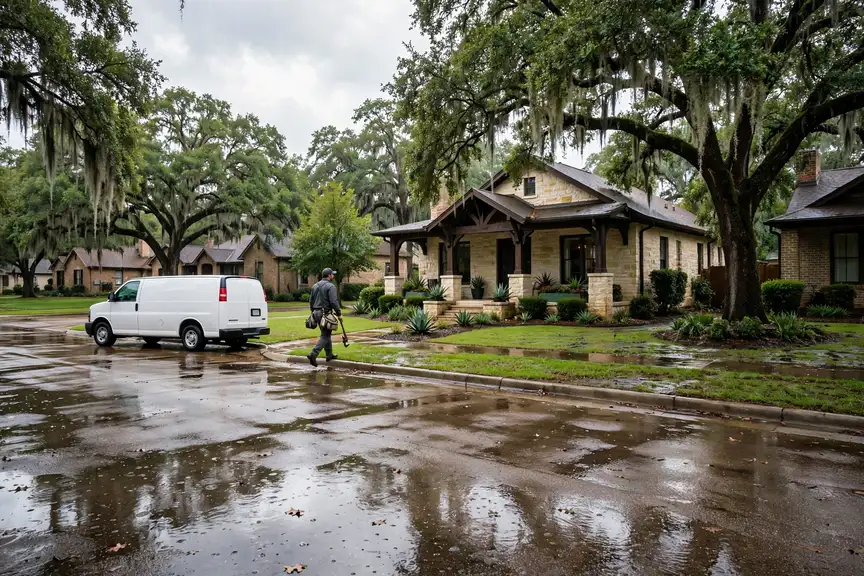
A local plumber's van on a residential street
Local plumbers serving Waco neighbourhoods
Water heater installation in a home garage
Water heater work across the metro

Waco plumbing, in brief

The median Waco home was built in 1981; 48.9% of the stock predates 1980, and the pattern this metro's own data ranks first is ageing cast iron sewer lines. PlumbReach USA is a referral service, not a plumbing company: one call connects you with an independent local plumber serving your ZIP code.

The Waco housing stock, and what it means for plumbing

Two numbers frame everything that follows: 63.1% of Waco homes are owner-occupied, and the median one was built in 1981. Ownership matters to plumbing because owners inherit their systems whole — every material decision a builder made in the 1980s or earlier is still in the walls, ageing on its original schedule. With 48.9% of homes predating 1980 and 25.5% arriving since 2000, the metro is really two housing stocks sharing one map, and they are taken separately below before the problems are ranked.

There is a materials timeline buried in Waco's housing figures, and it reads like a plumber's diary. The 27,401 homes from before 1960 were drained in cast iron or clay and supplied, in many cases, in galvanized steel. The 33,229 that followed between 1960 and 1979 mixed those materials with early copper. Then came the 31,617 homes of 1980-1999, plumbed increasingly in copper and early plastics. Each band of that timeline is now a band of characteristic failures, arriving in the order the materials tire — which is why a home's build year, in this metro, is the single most predictive fact about its plumbing.

The growth side of the metro tells the opposite story in the same language. Hewitt, Robinson and the subdivisions still filling in account for much of the 31,617 homes built since 2000 — plastic supply lines, plastic drains, cartridge fixtures, slab foundations. Their plumbing is not old; it is uniform, which creates its own calendar: everything installed in the same boom reaches each wear point in the same years, from the first water-heater replacements to the first slab-leak scares, while 2,868 cooling degree days of annual heat keep demand on the system high.

One more record sits over the whole metro, and it is the one the pipes themselves keep: the weather's. WACO RGNL AP, TX US logs 36.4 inches of precipitation in an average year and swings between 114.8 days at 90 degrees or more and 34.1 nights at or below freezing. Buried lines ride that swing in the soil; heaters ride it in their cycle counts; exposed runs ride it at the extremes. Cross the swing with the housing ages above and the selection of problems further down this page stops looking like a list and starts looking like an arithmetic result.

The Waco plumbing profile in numbers

Housing eras and climate, joined — the two datasets every section of this page is built from.

Break the stock down by building era and the profile sharpens. Before 1960: 22.1% of homes, roughly 27,401 of them. From 1960 to 1979: 26.8%, about 33,229. From 1980 to 1999: 25.5%, about 31,617. Since 2000: 25.5%, about 31,617. Four eras, four material palettes — and the balance among them is this metro's plumbing character in a single paragraph.

The 1960-1979 band is where this metro keeps its plumbing personality: old enough for galvanized to be failing and first-generation fixtures to be wearing out, young enough that copper systems still have decades in them. Two houses of identical age on the same Waco street can stand on opposite sides of that divide purely by what the builder specified — which makes this the metro where assumptions fail most often, and a camera or a pressure gauge earns its keep on nearly every diagnostic visit.

Second in the table, the 1980-1999 band: 31,617 homes, 25.5% of the metro. Its systems are mature rather than ancient — copper in its pinhole years in places, plastic drains still sound, first-generation cartridges wearing out in waves — and its plumbing is the schedulable kind: work that rewards being booked before it becomes urgent.

Translate the climate record into plumbing terms and it comes out as three working conditions. Condition one, the freeze count — 34.1 nights a year when exposed water can solidify and split its container. Condition two, the heat count — 114.8 days that load drains, heaters and tempers simultaneously. Condition three, the water itself: 36.4 inches of it arriving from the sky to move the soil around every lateral in the metro. Waco's systems are engineered, installed and aged inside those three conditions, and their failures carry the conditions' fingerprints.

Hold the two halves together and the rest of this page explains itself: the problems ranked highest here are the ones where Waco's dominant housing era and its climate record overlap. Change either dataset and the ranking changes — which is precisely why this profile is rebuilt from the records for every metro instead of carried over from the last one.

Plumbing services in Waco

Listed in the order this metro's housing and climate data supports.

Sewer Line Repair & Replacement in Waco

The sewer line is the one pipe every other pipe depends on. When it bellies, cracks or fills with roots, the whole house feels it through its ground-floor fixtures. Repair ranges from sectional fixes through a cleanout to full replacement, chosen from camera footage rather than guesswork.

The camera footage is where Waco's sewer conversations get honest. From the surface, a backup is a backup; on the screen, the metro's whole history is visible — clay joints shouldered apart by decades of soil movement, cast iron scaled to half its width, a plastic line in a newer subdivision bellied where its bedding settled. Bosque County's older laterals and the growth areas' young ones fail in their own dialects, and the repair that follows the footage — sectional, partial, or the full run to the street — is the one the pipe itself argues for. Count it in homes if you prefer: 60,630 built before 1980, 31,617 since 2000, one shared system of soil and seasons.

Under Waco lie 123,987 laterals, one per housing unit, and the oldest of them — beneath the 27,401 pre-1960 homes — have been underground since the metro was a fraction of its present size. The camera diary in Hewitt and the old core is written by that buried generation.

More about sewer line repair & replacement ➔

Pipe Repair & Repiping in Waco

The supply system is a single organism, so its failures correlate. Repiping exists for the point where correlation is obvious: pressure fading, water discolouring, leaks touring the house. New runs go in PEX or copper, routed to minimise opening walls, pressure-tested before anything is closed up.

Pressure is the pipe system's public voice, and in Waco it speaks with a district accent. In the pre-1980 districts — 60,630 homes — it fades year by year as galvanized bores narrow, a decline so gradual that households adapt to it fixture by fixture and only notice when a visitor's shower puts theirs to shame. In the newer subdivisions it stays loud and even. The repair-or-renew decision is usually just a translation of that voice: a system whose pressure is leaving has delivered its diagnosis already, and the assessment visit exists to confirm it in person. With a median build year of 1981, most of the metro's 123,987 housing units are working through the same ageing curve.

The repair-or-renew caseload is set by one figure above the rest: 48.9% of Waco homes predate 1980, plumbed in the materials now at the end of their service lives. Around Bellmead (10,550 residents) as in the old core, that percentage is not an abstraction — it is the street's plumbing, house by house.

More about pipe repair & repiping ➔

Water Heater Repair & Installation in Waco

From Waco to Bellmead, the heater question is the same — repair the unit or renew it — and the honest answer starts from its age against Waco's demand record, which this page sets out.

More about water heater repair & installation ➔

Emergency Plumbing in Waco

Emergencies in Waco are answered by local independents, not a dispatch centre: PlumbReach USA routes the call, and the stock it serves — 123,987 homes across 36 ZIP codes — is the stock this page profiles.

More about emergency plumbing ➔

Drain Cleaning in Waco

Waco's drains are cleared by local independents who work this stock weekly: a median build year of 1981 means most lines they open have decades of history in them, and the clearing approach is chosen for the era, not the postcode.

More about drain cleaning ➔

Leak Detection & Repair in Waco

The meter test starts it in Waco as everywhere; what follows is local — knowing which of Bosque, Falls, McLennan' eras hide lines in slabs, which in crawl spaces, and where the soil movement at WACO RGNL AP, TX US's record makes joints let go.

More about leak detection & repair ➔

Toilet Repair & Installation in Waco

In Waco, a toilet that runs all night is a water bill with a sound; the local service replaces the tired internals and checks the flange and supply while the tank is open.

More about toilet repair & installation ➔

Faucet, Fixture & Garbage Disposal Repair in Waco

Fixture work in Waco divides by era like everything else on this page: washer-era taps in the older districts, cartridge internals in the post-2000 subdivisions — the local plumber stocks for both.

More about faucet, fixture & garbage disposal repair ➔

What Waco books most

Two patterns generate most of the bookings behind the services above: Ageing cast iron sewer lines and galvanized pipes at the end of their life. That is why the order of this page's service list is what it is — the services answering those patterns come early, and the rest follow in the order the metro's data supports. A homeowner whose home matches the local profile — built in the metro's big decades, in one of its older districts — is, statistically, reading their own shortlist.

Plumbing problems Waco homes actually get

Selected and ranked from this metro's housing-age profile and climate record — not copied from another city's page.

Ageing cast iron sewer lines

Ask a cast iron drain how it is doing and it answers at the ground-floor fixture in the house. That is where a failing main shows itself first — the ground-floor bath that gurgles, the basement drain that sighs up odours — because everything above drains through the same tired run. In Waco, the homes reporting those signals share a profile: built when cast iron was the default, in the streets around Waco that went up first. The pipe underground is rough now with scale, its bore narrowed, its joints weeping into the soil — and the fixtures upstairs are merely its messengers.

The pipe itself explains the timeline. Cast iron drains by gravity, slowly, and everything a household sends down it — grease films, mineral-heavy water, the occasional corrosive cleaner — works on the iron for decades. The metal does not fail evenly: it thins first at the bottom of horizontal runs, where water and grit sit longest, and at the joints where sections meet. That is why two Waco homes of the same age can be in different places with the same pipe: usage, water chemistry and soil conditions around the line all vote on how fast it goes. What a camera inspection adds is certainty — the difference between a line that needs cleaning, a line that needs a section replaced, and a line living on borrowed time.

The historical record is the evidence: iron was the default drain material for the whole era that built this metro's core, and the Census counts that era's survivors home by home — 27,401 of them. Camera surveys in those districts confirm the arithmetic often enough that the pattern's ranking here is the least speculative thing on this page.

Watch for

  • A floor drain that smells of the sewer after dry weather
  • Toilet bowls that bubble when the washing machine drains
  • Patches of unusually green grass along the line's path to the street

About sewer line repair & replacement ➔

Galvanized pipes at the end of their life

Galvanized pipe does not fail loudly; it fails by narrowing. Zinc coating gone, the steel rusts from the wet side, and every year the passage water travels through is a little smaller than the year before. The household reads it as personality — the shower that weakens when a tap opens, the washing machine that fills slowly, the rust tinge after a holiday — until the day a pinhole opens in a wall and the personality becomes a flood. In housing built when galvanized was simply how houses were plumbed, the whole system is one age and one material, which is why the faults stop being isolated: the pipe is not breaking in one place, it is finishing in all of them at the same pace, and the repair conversation has to reckon with that arithmetic.

Galvanized pipe fails politely, which is precisely the problem. No flood, no drama — just a shower that weakens across years, a washing machine that fills slowly, water that blushes rust after holidays. Households adapt without noticing, the way you adapt to a dimming bulb. The 33,229 homes built in this metro between 1960 and 1979 stand in the front of that queue now, their original steel bores narrowed to drinking-straw width in the worst runs. The fix, when it comes, tends to astonish people — not with its scale, but with the pressure they had forgotten they were owed.

Count the exposure from the Census side: the metro's 60,630 pre-1980 homes were plumbed in galvanized's long reign, and the material's failure mode — internal rust, narrowing bore — is a matter of chemistry, not workmanship. The variable is speed; the direction, for every one of those systems still original, is settled.

Watch for

  • Water running rusty-brown first thing in the morning, then clearing
  • Pressure noticeably weaker at the far end of the house than near the meter
  • Neighbours on the same street reporting the same slow decline

About pipe repair & repiping ➔

Ageing sewer laterals

Every lateral in Waco is a private road with a public destination, and like a road it wears where the traffic and the ground conspire: at the joints. Sections laid generations ago were joined to the standards of their day, and the decades since have worked each joint individually — a fraction of movement here, a root hair there. The ground-floor fixtures report the cumulative result. Sewer service is the survey of that road, cleanout to street, and its recommendations scale with the survey: a joint renewed, a section replaced, or — where the whole run has given up — a new road laid on the old one's line.

The lateral is the hardest-working pipe a household owns and the only one nobody ever sees. It carries everything, it was buried once and forgotten, and its condition depends on decisions made the year the house was built: the material chosen, the slope it was laid at, the soil it was bedded in. Ageing laterals fail in characteristic ways — joints offset as soil settles, bellies where the bedding washed or sagged, walls thinned by decades of flow. The house above reports these failures indirectly, through its ground-floor fixtures, which is why a sewer problem so often gets mistaken for a simple clog at first. In Waco, where whole districts were built in the same few decades, laterals are ageing on a shared timetable — the line under one house is a fair guide to the line under its neighbour's.

Think of the laterals as a hidden census: 123,987 lines, one per home, the oldest of them — serving the 27,401 pre-1960 homes — now in their seventh decade underground. They age in soil that moves with Waco's seasons, and their condition surfaces only as symptoms inside the house, which is why so many are discovered late.

Watch for

  • Several drains slow at the same time
  • Ground-floor fixtures in the home back up first
  • Cleanings that help for less time each visit

About sewer line repair & replacement ➔

Storm season readiness in Waco

The season's plumbing story is told in water levels: soil saturated to the surface, groundwater standing high against every lateral joint, drains asked to carry away in hours what they usually carry in weeks. Backups follow the ground-floor fixtures, and the post-storm weeks bring the secondary wave — lines found to have shifted in softened ground, cleanouts buried under debris. Homes prepare the way they can: drains known, shutoffs known, the number for help already saved before the sky makes the decision for them.

When the storms come, Waco's plumbing meets them in the ground: laterals under saturated soil, cleanouts under standing water, ground floors at the level the water is looking for. The season tests the buried half of every system here, and it tests the older districts — where the lines are jointed clay and iron — hardest of all. Preparation is unglamorous and specific: know the cleanout, know the shutoff, know the ground-floor drain in the house.

A closer look: ageing cast iron sewer lines in Waco

In Waco the pattern has an address pattern. The cast iron went under the homes built before 1960 — the streets of the old core and the first suburbs around Waco — and it is failing in the order those streets were built. A camera call in the historic districts is a different appointment from one in Hewitt or the newer subdivisions: there, the same symptoms usually trace to something younger and simpler. Knowing which side of that line a home sits on is most of the diagnosis before the camera ever leaves the van, and it is why this page ranks the problem by the metro's pre-1960 count rather than by anecdote.

Read the ranking backwards and it reads as a data summary: 299,217 residents in 123,987 housing units, 22.1% of the housing from before 1960, 36.4 inches of rain in an average year. The pattern leads because the exposure is broad — counted not in individual unlucky houses but in whole eras of the metro's building, stacked one on another.

The first visit follows a short, diagnostic list — each item ruling a branch of the problem in or out:

  • The ground-floor fixtures first — a main-line problem reports there before anywhere else
  • The age and material of the line, from the home's era and any past camera reports
  • Whether gurgling tracks the washing machine's discharge — a classic main-line signature
  • The cleanout's cap and condition, and whether it has ever been opened

From problem to fixed, in Waco

A plumbing problem inside a Waco homePROBLEM
➔
The same system in Waco after professional repairSOLUTION

Areas covered in the Waco metro

Waco

Population 141,925

Hewitt

Population 16,244

Robinson

Population 12,668

Bellmead

Population 10,550

Woodway

Population 9,483

Lacy-Lakeview

Population 7,247

McGregor

Population 5,608

Marlin

Population 5,500

Clifton

Population 3,489

West

Population 2,571

Willow Grove

Population 2,333

Beverly Hills

Population 1,631

Also in the Waco metro: Meridian (population 1,546), Bruceville-Eddy (population 1,529).

Read the grid as a building programme spread over a century. The oldest communities sit where the metro began; the youngest are still adding streets at its edge; and Hewitt and Robinson, with 16,244 and 12,668 residents, stand for the rings in between. Each ring plumbed in its era's materials, and each is now failing, wearing or holding in its era's characteristic order. The ZIP codes below draw the coverage boundary; the eras inside it draw everything else on this page — the problems ranked, the services ordered, the checks advised.

Beyond the largest communities sit Bellmead (10,550), Woodway (9,483), Lacy-Lakeview (7,247), McGregor (5,608), Marlin (5,500) — smaller places across Bosque, Falls, McLennan, covered on the same terms. Their housing tends to be older on average than the big suburbs', and their calls follow the older patterns on this page. One routing covers them all: find your ZIP code below and the rest is a phone call.

Waco ZIP codes we cover

76524, 76570, 76624, 76630, 76632, 76633, 76634, 76637, 76638, 76640, 76643, 76649, 76652, 76654, 76655, 76656, 76657, 76661, 76665, 76671, 76680, 76682, 76685, 76689, 76690, 76691, 76701, 76704, 76705, 76706, 76707, 76708, 76710, 76711, 76712, 76798

The Waco metro in detail

Waco (141,925 residents) anchors the metro, and Hewitt (16,244) is its second centre of gravity. Between them they hold the bulk of the 109,442 households — and, not coincidentally, the bulk of every housing era this page discusses, from the pre-1960 core to the newest subdivisions. Robinson (12,668) and the communities beyond it repeat the same eras at smaller scale.

One metro, 3 county lines drawn through it: Bosque, Falls, McLennan. The lines are invisible to the water and the weather, but they structure everything administrative around a plumbing job — which office permits it, which inspector signs it, which code edition applies. Bosque County, at the centre, carries the oldest housing and the heaviest share of the work this page describes; its neighbours carry the growth. A routed local plumber navigates the patchwork so the homeowner does not have to.

Beyond the metro line, the nearest covered metros are Killeen–Temple, TX (42 miles away), College Station, TX (74 miles) and Dallas–Fort Worth, TX (90 miles) — separate pages, separate profiles, because their housing and weather records are their own. Homeowners near the boundary sit between two datasets; the ZIP list above, not the map's edge, decides which page was written about your stock.

Set Waco among its neighbours and the contrasts sharpen the profile: Killeen–Temple, TX — metro population 511,497, median build year 1993 — sits 42 miles away; College Station, TX (287,476, median 1994) 74 miles; Dallas–Fort Worth, TX (8,477,157, median 1992) 90 miles. Three different housing stocks under three nearby skies, which is why each keeps its own page and its own problem ranking rather than borrowing this one.

Ratios tell the metro's story compactly. Renters occupy 36.9% of homes; owners hold the rest. For every home built since 2000 there are 1.9 from before 1980. Spread the stock across the coverage map and each ZIP code carries about 3,444 housing units — the density at which era patterns repeat street after street instead of scattering, and at which a routed round of calls stays inside a few districts.

The Waco record in one line — median home age: 45 years · owner-occupied homes: 69,058 · renter-occupied homes: 40,384 · pre-1960 homes per covered ZIP code: 761 · heating-to-cooling degree-day ratio: 0.73 · average rainfall: 925 mm a year.

Waco plumbing questions

Which neighbourhoods and ZIP codes does PlumbReach USA cover in Waco?
If your address sits anywhere in the Waco metro, start with the ZIP list on this page: 36 codes, spread over 3 counties and every community in the areas grid, from the centre of Waco to the metro's edge. Listed there means covered here — and means this page's housing and climate homework was assembled for your stock. The weight of it sits where the metro does: Waco alone holds 47.4% of the metro's residents, and the coverage follows the housing from there outward, era by era. Coverage questions come back to the same evidence: the housing counted in Bosque, Falls, McLennan, the 31,617 homes built since 2000 at the edge and the older core alike — one footprint, printed in full above. The ground inside that boundary holds 123,987 housing units — 27,401 from before 1960, 33,229 from 1960-1979, 31,617 since 2000 — under the climate record kept at WACO RGNL AP, TX US. Stated as a list of codes: the codes run 76524, 76652, 76690, 76798 and 76704 among the 36 on the list, spread over Bosque, Falls, McLennan.
A Waco house from about 1981 — which parts of its plumbing deserve a closer look?
Start with whatever is original. A the 1980s build in Bosque County has likely kept some of its first plumbing — and with 60,630 pre-1980 homes across the metro, plumbers here open walls on that stock every week. The tells are gradual: pressure a little weaker than last year, a drain cleared a little more often, a heater recovering a little more slowly. None of them is an emergency; together they are a timetable. In Waco that plays out across 36 ZIP codes, from Waco to Hewitt. Geography of the advice: it holds across 36 ZIP codes and 3 counties, in the 109,442 households the Census counts from Waco out to Bellmead — the eras differ by district, the watch-list does not. The metro context is worth holding onto: 22.1% of the stock predates 1960, and the districts around Hewitt and Robinson hold much of it — your home's neighbours are ageing on the same timetable. Set against the climate that works on them — 2,080 heating degree days, 2,868 cooling degree days, 36.4 inches of rain at WACO RGNL AP, TX US — the era of a Waco home is the strongest single clue to the condition of its plumbing. Where the watching happens, in figures: the community ledger reads Waco (141,925 residents), Hewitt (16,244), Robinson (12,668), Bellmead (10,550) and Woodway (9,483), out of 299,217 residents metro-wide — one timetable of ageing systems across all of them.
Which plumbing fault shows up most often across Waco?
The honest answer comes from the stock, not from anecdotes: Waco's leading pattern is ageing cast iron sewer lines. Ask a cast iron drain how it is doing and it answers at the ground-floor fixture in the house. Homes around Waco and the older districts supply most of these calls, because that is where the relevant housing concentrates. The backdrop is the same metro-wide: 123,987 housing units working against the WACO RGNL AP, TX US climate record. Homeowners near Waco meet this pattern first; the subdivisions past Robinson meet it later, as their stock reaches the same age — the queue is set by the building map, not by chance. Homeowners comparing notes across the metro — Waco (141,925 residents), Hewitt (16,244), Robinson (12,668) — are comparing the same ranked list, because the ranking was run on all 36 ZIP codes at once. The inputs behind the ranking, era by era: the era ledger reads 27,401 homes before 1960, 33,229 from 1960-1979, 31,617 from 1980-1999 and 31,617 since 2000 — 123,987 units, 109,442 households, 63.1% of them owner-occupied.
How does the Waco climate change what my plumbing needs?
Directly. The long-term normals at WACO RGNL AP, TX US — 2,080 heating degree days, 2,868 cooling degree days, 36.4 inches of precipitation in an average year — set the local plumbing calendar: freeze risk for exposed lines in the cold stretch, heavy heater and drain loads through the hot months, and soil that swells and shrinks between seasons, which buried lines feel before anything else does. The figures behind that answer, from the station record: a yearly average of 67.1 degrees, 36.4 inches of precipitation, 114.8 days at 90 or above and 34.1 nights at freezing or below — the four numbers this page's seasonal section is built from. It is the same story from Hewitt to Robinson — the stock decides, and this stock's median build year is 1981. The record behind it is measured at WACO RGNL AP, TX US and felt from Hewitt to Bellmead: one climate for Bosque, Falls, McLennan, 123,987 housing units, and every pipe, heater and lateral inside them. The figures are worth keeping with the house papers: 67.1 degrees as the yearly average at WACO RGNL AP, TX US, 36.4 inches of precipitation, and a housing stock whose median year is 1981 — the three numbers this metro's plumbing lives by. That load lands on 109,442 households across Bosque, Falls, McLennan — 22.1% of their homes predate 1960, a median build year of 1981 — which is why the climate section of this page is arithmetic, not atmosphere. Whose roofs that weather works on: the community ledger reads Waco (141,925 residents), Hewitt (16,244), Robinson (12,668), Bellmead (10,550) and Woodway (9,483), out of 299,217 residents metro-wide.
Water is coming through my ceiling in Waco. What do I do in the first five minutes?
Shutoff first, questions later. In most Waco homes the main valve sits by the meter or where the supply line comes through the wall; turn it, open the tap at the bottom of the system to drain the lines down, and move anything water-soluble out of the wet zone. Sewage changes the rules — keep people and pets out of it entirely — and the smell of gas means leave and call from outside. Across the metro's 3 counties, Bosque County included, the pattern repeats wherever the housing matches. Where the valve lives in Waco follows the build decade: the 60,630 pre-1980 homes shut off indoors or at a curb stop, the slab subdivisions toward Bellmead at the meter box — and WACO RGNL AP, TX US's 34.1 freezing nights a year are why the calm-day search for it matters here more than in milder metros. Local records underline the point: WACO RGNL AP, TX US logs 34.1 freezing nights a year, and the burst calls that follow them come from the same districts each time — the pre-1980 streets around Waco and Hewitt — where valves are least often exercised. Afterwards, the details that help the call: your ZIP — anywhere from 76524 to 76798 on this page's list — your district, and your home's era out of a stock where 60,630 homes predate 1980. True in every covered code: the codes run 76524, 76652, 76690, 76798 and 76704 among the 36 on the list, spread over Bosque, Falls, McLennan — the first minute is the same in all of them. For the record of the call: the Waco metro, 299,217 residents, 63.1% of its homes owner-occupied, a median build year of 1981. Learn it street by street if you must: the 76798 subdivisions shut off at the meter, the 76704 districts at the wall, the oldest homes out toward 76624 at a curb stop — the map of valves is the map of build decades.
Are older Waco homes more likely to need repiping?
Age alone convicts nobody — there are the 1980s copper systems in this metro that will outlast their owners. What convicts a system is repetition inside one material: leak, repair, leak elsewhere, repair, pressure falling the whole time. Waco's older districts produce that story often enough that the repipe question is routine here, but the answer is still earned house by house, from the evidence in the walls. Homeowners in Hewitt (16,244) and Robinson (12,668) read this page for the same reason — the stock there is the same stock. Drive it in any direction — out to Bellmead, back through Hewitt — and the eras change but the materials story does not. Ask where this conversation happens most and the answer is a map: the districts plumbed in the galvanized decades, from the centre out through Hewitt (16,244 residents) and Robinson (12,668), across Bosque, Falls, McLennan. The newer communities in the grid hear it rarely — their turn is scheduled decades from now. The evidence standard is the same across Bosque, Falls, McLennan: in the 27,401 pre-1960 homes the bore of a cut section settles it; in the 1960-1979 ring — 33,229 homes — the sequence of leaks settles it. The metro's ledger, for the record: 27,401 pre-1960 homes, 33,229 from 1960-1979, 31,617 from 1980-1999, 31,617 since 2000 — the repipe pattern lives in the first two columns. Where the pattern concentrates, in codes: the codes run 76524, 76652, 76690, 76798 and 76704 among the 36 on the list, spread over Bosque, Falls, McLennan, thickest in the earliest-built of them.
Is PlumbReach USA the company that will do the work at my Waco home?
Two businesses, two jobs. PlumbReach USA's job is information and routing: pages like this one, built from Waco's real housing and climate figures, and a call center that connects you onward. The local plumber's job is everything that happens at your home — assessment, the work itself, and the relationship that follows from it. The person who arrives will be that plumber or their team, from a business of their own. We find the arrangement serves homeowners well when nobody pretends otherwise. The local figures behind it: 60,630 homes from before 1980 and 31,617 built since 2000, sharing one system of streets and soil. The arrangement is the same across the whole footprint: 36 ZIP codes, 3 counties, communities from Waco through Bellmead — in each of them the professional is local, independent, and working their own patch of the metro's housing. The same plain statement covers the whole metro, from the core around Waco to the edge past Robinson: information and routing from us, the work and everything that follows from it from the independent professional you hire. The footprint the model serves, in figures: 36 ZIP codes — 76524 to 76798 among them — 3 counties, 109,442 households, from Waco (141,925 residents) outward. The arrangement holds in every community: the community ledger reads Waco (141,925 residents), Hewitt (16,244), Robinson (12,668), Bellmead (10,550) and Woodway (9,483), out of 299,217 residents metro-wide.
What plumbing checks are worth doing each year in Waco?
The highest-value checks here are the ones aimed at this page's top patterns. Know and test your shutoff. Keep the meter honest — a reading taken when the house is asleep should not move. Give the water heater its yearly drain-down, and the ground-floor drains a run of water so their traps stay wet and sealed. In a metro where the median home was built in 1981, those four habits intercept most of what eventually becomes an emergency call. None of it is abstract at this scale: 109,442 households across Bosque, Falls, McLennan share one climate and one ageing stock, so a yearly rhythm kept by even a fraction of them is the difference between this metro's plumbing failing in private, one house at a time, and failing on a schedule somebody saw coming. The checks travel well because the conditions do: WACO RGNL AP, TX US's record covers Hewitt, Robinson and Bellmead alike, and the housing eras repeat across all 36 ZIP codes. A neighbour in another district keeping the same calendar is not copying you; they are reading the same data. The calendar's local proof is in the stock figures: 60,630 pre-1980 homes to keep valves alive in, 31,617 post-2000 homes reaching first-fixture age together, and 36.4 inches of rain a year testing every cleanout in Bosque, Falls, McLennan. The checks are sized to the stock's actual eras — a median build year of 1981, 22.1% of it pre-1960 — not to a generic house that exists nowhere in Waco. The routine's stock, counted: the era ledger reads 27,401 homes before 1960, 33,229 from 1960-1979, 31,617 from 1980-1999 and 31,617 since 2000 — 123,987 units, 109,442 households, 63.1% of them owner-occupied.
How were the plumbing problems on this page ranked for Waco?
It starts from the two datasets this page is built on: Census housing figures for the Waco metro and NOAA's 1991-2020 climate normals for WACO RGNL AP, TX US. Every candidate pattern — ageing laterals, slab leaks, freeze damage and the rest — is weighed against both: how much of the local stock is exposed to it, and how hard the local climate pushes it. The order you are reading is the result, and it is recalculated metro by metro rather than inherited from a bigger city's page. Run the same scoring on any single district and the order bends: Hewitt's streets would rank their own list, Bellmead's another. This page ranks the metro as a whole — 109,442 households across Bosque, Falls, McLennan — which is why the evidence paragraphs keep returning to where each pattern actually concentrates. The sort is re-run from the data, not inherited: 22.1% pre-1960 stock, 48.9% pre-1980, 114.8 hot days against 34.1 freezing nights — the weights are this metro's, so the ranking is. Both inputs, printed: Census figures for the Waco metro — 299,217 residents, 123,987 housing units — and the NOAA normals at WACO RGNL AP, TX US, 2,080 heating degree days set against 2,868 cooling degree days. The scoring's raw material, community by community: the community ledger reads Waco (141,925 residents), Hewitt (16,244), Robinson (12,668), Bellmead (10,550) and Woodway (9,483), out of 299,217 residents metro-wide. Run the identical scoring next door and the order shifts: Killeen–Temple, TX, 42 miles away, keeps its own list; College Station, TX, 74 miles, another; Dallas–Fort Worth, TX, 90 miles, a third — proximity is not sameness. Subset the inputs and the order bends: score Hewitt's streets alone and their eras lead; score the Bellmead subdivisions alone and theirs do. The printed order belongs to the full 36-code metro, no smaller unit.
Which Waco neighbourhoods sit on the metro's oldest pipes?
Read the metro as a materials map and the oldest plumbing draws itself. Where the building is pre-war and immediate post-war — the centre, the streetcar-era districts, the first ring past them — the drains are iron or clay and the supplies are steel, all of it installed when Waco was a fraction of its present size. Move outward through Hewitt toward the newest subdivisions and the materials modernise decade by decade. Oldest pipes, oldest map: in this metro they are the same picture. It is also a numbers story: of Waco's 123,987 housing units, the pre-1960 share is 22.1% — the largest single concentration of original-era pipework in the metro, sitting in the districts where Bosque County's streets were laid out first. Concentrations, for the record: the oldest systems sit inside the 27,401 pre-1960 homes, and those homes cluster — the founding core, the streetcar-era streets, the first suburbs in Bosque County — rather than scattering evenly across the 36 covered ZIP codes. The layers have counts: 27,401 homes in the oldest ring, 33,229 in the 1960-1979 ring, 31,617 since 2000 at the edge — the drive out from Waco passes them in order. ZIP by ZIP the same gradient: the oldest systems cluster in the codes nearest the centre — the 76524 side of the list — and the youngest toward 76798 at the edge, across Bosque, Falls, McLennan. The map's own numbers: the era ledger reads 27,401 homes before 1960, 33,229 from 1960-1979, 31,617 from 1980-1999 and 31,617 since 2000 — 123,987 units, 109,442 households, 63.1% of them owner-occupied. Counted under its Census name — the Waco metro, 299,217 residents, 63.1% owner-occupied — the oldest layer is a defined population of homes, not a figure of speech.
What should a yearly plumbing check in Waco actually include?
Read the findings other local homeowners get and a pattern assembles: valves stiff from disuse, anode rods spent in heaters older than their protection, supply lines in the material the the 1980s installed, traps dry in little-used bathrooms. A check in Waco is essentially a census of those four, taken one house at a time — which is why the walk is standardised: the stock keeps returning the same answers, and the value lies in hearing them early. Scale the walk to the metro and its importance grows: 109,442 households, a median build year of 1981, 36.4 inches of rain a year pressing on the buried half of every system. The check is thirty minutes in one home; multiplied across a stock like this, it is the difference between the metro's failures arriving as surprises and arriving as appointments. The walk's findings repeat across the footprint with local accents: seized shutoffs in Hewitt's older streets, heater sediment in the growth subdivisions past Robinson, meter creep in the slab tracts toward Bellmead — one shortlist, read against 123,987 homes under WACO RGNL AP, TX US's sky. Keep the findings with the house records: in a metro of 109,442 households, the homes whose owners can date their last check are the ones whose failures arrive as appointments — the entire point of the half hour. The walk, scaled: 123,987 homes, 60,630 of them pre-1980, a median year of 1981, a climate of 2,080 heating degree days and 36.4 inches of rain at WACO RGNL AP, TX US — the shortlist is those numbers, interviewed one house at a time. The walk's territory, in codes: the codes run 76524, 76652, 76690, 76798 and 76704 among the 36 on the list, spread over Bosque, Falls, McLennan.

Before an emergency, read the guide: How to shut off your home's water main

Nearby metro areas

Need a plumber in Waco?

Describe the problem and the call center routes you to an independent local plumber who works in the Waco metro.

Call center hours: Mon-Fri 7:00 AM-10:00 PM ET | Sat 8:00 AM-10:00 PM ET | Sun 7:00 AM-9:00 PM ET

Call Now
