

Home / Cities / Wisconsin / Green Bay

Plumbing Services in Green Bay, WI

Start with the stock, and the rest of the page follows: Green Bay's housing eras, its climate record at GREEN BAY, WI US, and the failure patterns those two manufacture together — ranked, evidenced and answered below. When the pattern matches your home, one call routes you to an independent local plumber who works these streets.

Call center hours: Mon-Fri 7:00 AM-10:00 PM ET | Sat 8:00 AM-10:00 PM ET | Sun 7:00 AM-9:00 PM ET

30
ZIP codes covered
3
Counties in the metro
135,165
Households (Census ACS)
1980
Median year home built
Green Bay, WI — the metro skyline and landscape
Green Bay, WI — plumbing help across the metro
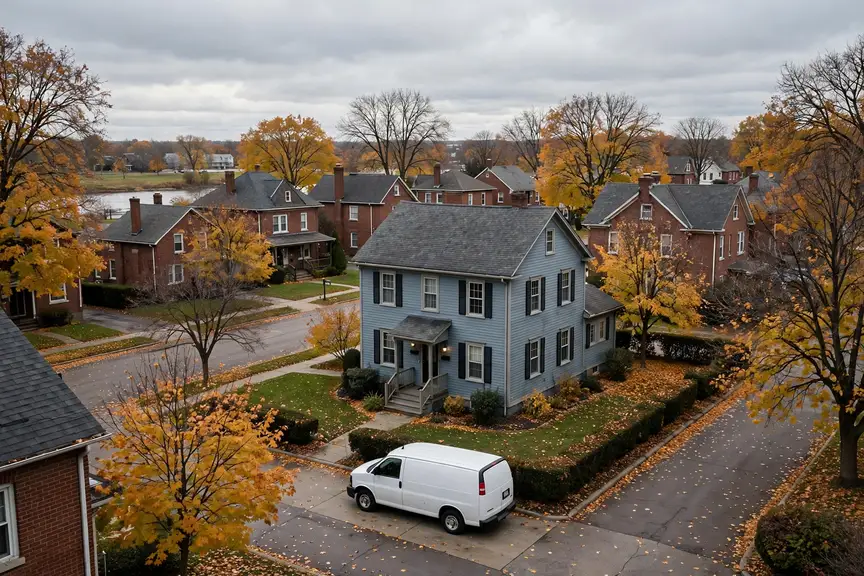
A local plumber's van on a residential street
Routing local plumbers across the Green Bay metro
Water heater installation in a home garage
Water heater work across the metro

Green Bay plumbing, in brief

The median Green Bay home was built in 1980; 50.3% of the stock predates 1980, and the pattern this metro's own data ranks first is freeze-burst pipes in cold snaps. PlumbReach USA is a referral service, not a plumbing company: one call connects you with an independent local plumber serving your ZIP code.

The Green Bay housing stock, and what it means for plumbing

Start with the raw material: 329,375 people, 147,446 housing units, and a housing stock whose middle home was built in 1980. That single date organises everything on this page. On one side of it stand the older districts — 24.9% of homes predate 1960, 50.3% predate 1980 — plumbed in galvanized steel, cast iron and clay, in homes across Brown, Kewaunee, Oconto that have been repaired piecemeal for decades. On the other side, the 22.9% built since 2000 run plastic lines under slabs, and fail in the newer ways. A Green Bay plumber reads a home's build year the way a doctor reads a chart: it predicts, before a single wall is opened, which systems deserve suspicion first.

Ask how Green Bay's older homes have been kept and the honest answer is: in pieces. A water heater here, a repipe there, one bathroom renewed while the rest of the system carries on — across 74,165 pre-1980 homes, the patchwork is the norm rather than the exception. That history is written in the walls of Brown County and everywhere else the early stock stands: systems that are part original, part renewed, and entirely individual. It is also why the guidance on this page keeps returning to patterns rather than single faults — in a patchwork system, the pattern is the diagnosis.

There is a second way to read the growth figures: as a maintenance wave still approaching. The 33,765 homes built since 2000 were handed over with everything new at once — heaters, cartridges, supply lines, seals — and new things age in convoy. The first replacements in those subdivisions have begun; the wave behind them is arithmetic. Households in De Pere and the other growth districts who learn their systems now, while the systems are still young, are the ones who will meet that wave as a schedule rather than a surprise.

Over everything sits the weather, and here it is measured rather than described: NOAA's station at GREEN BAY, WI US averages 45.7 degrees across the year, with 5.5 days reaching 90 or more and 152.3 nights at freezing or below. A buried lateral feels that record as soil that swells and pulls away; a water heater feels it as an unbroken cycle count; an exposed line feels it on the single coldest night. The problem ranking below is what those numbers, crossed with the housing profile, produce for Green Bay specifically.

The Green Bay plumbing profile in numbers

Housing eras and climate, joined — the two datasets every section of this page is built from.

Lay the eras side by side instead: 24.9% pre-1960 (36,714 homes), 25.4% from 1960-1979 (37,451), 26.8% from 1980-1999 (39,516), and 22.9% since 2000 (33,765). No single era tells the story — the proportions among them do, and those proportions are different in every metro this site covers.

This metro's stock was mostly built in plumbing's transitional decades, 1980 to 1999, and it shows a particular failure calendar: not the corrosion sagas of the old metros, but the wear-out wave of everything installed in those years arriving together — cartridges, heater tanks, fixture finishes, the first of the plastic systems ageing into brittleness. Green Bay's plumbing story for the next decade is largely written: it is the story of that installed base reaching its limits neighbourhood by neighbourhood.

The second band in the table is the 1960-1979 stock: 37,451 homes, 25.4% of the metro. It is the transition generation — copper arriving, galvanized lingering, drains mixed street by street — and it supplies Green Bay with its most diagnostic plumbing: two homes of the same year needing opposite answers, decided by what the builder happened to specify.

Start the climate half where the water starts: underground. Green Bay's laterals rest in soil that takes 31.61 inches of rain in an average year and dries between deluges, swelling and shrinking against their joints through every season. Above ground the same record reads as workload — 508 cooling degree days of hot-water demand, 7,505 heating degree days of cold incoming water at GREEN BAY, WI US. A plumbing system here is never in neutral; the record keeps it working at one end or the other all year.

Hold the two halves together and the rest of this page explains itself: the problems ranked highest here are the ones where Green Bay's dominant housing era and its climate record overlap. Change either dataset and the ranking changes — which is precisely why this profile is rebuilt from the records for every metro instead of carried over from the last one.

Plumbing problems Green Bay homes actually get

Selected and ranked from this metro's housing-age profile and climate record — not copied from another city's page.

Freeze-burst pipes in cold snaps

Ice does its damage in silence and announces it in flood. The split forms under pressure while the line is frozen, holds while the ice plug seals it, and opens the moment the thaw restores flow — which is why burst pipes are so often discovered by sound: water running somewhere it should not be, in a house that was intact at breakfast. Green Bay's exposure sits where its housing does — in the older districts' unprotected runs and every era's additions and garages — and the repair visit's second job, after the pipe itself, is the insulation and routing that keep the same night from repeating.

Prevention, for this pattern, is a geography lesson: the burst never happens in the middle of the heated house. It happens at the perimeter — the wall cavity on the windward side, the run beneath the addition, the pipe the builder routed through the garage to spare six feet of copper. In Green Bay, where 5.5 summer days tempt everyone to forget what 152.3 freezing nights intend, the autumn ritual is short and specific: find every line that leaves the warmth, and do something about it. The households that keep that ritual read about burst pipes the way other people do — as news.

The exposure is written in the climate record: GREEN BAY, WI US averages 152.3 nights a year at or below freezing, and it takes only one hard night to split an unprotected line. The housing side of the equation is the metro's older stock — homes from the 1980s and earlier, plumbed before freeze protection was routine, with lines in exterior walls and unheated crawl spaces that modern builds route through conditioned space instead.

Watch for

  • A pipe that froze during a cold snap, even if it did not burst
  • Water stains appearing as temperatures rise after a freeze
  • Exposed lines in garages, crawl spaces or outside walls

About pipe repair & repiping ➔

Ageing cast iron sewer lines

Cast iron's failure is chemical before it is mechanical. Decades of waste water and vent gases work the pipe's crown and bore, converting sound iron to a roughened, thinning shell whose inner surface snags everything the household sends down. In Green Bay, where 36,714 homes predate 1960, that chemistry has had sixty years and more to run. The symptoms arrive from the bottom of the system upward — the ground-floor fixtures complain first — and the diagnosis is a camera run that reads the bore the way a doctor reads a scan: where scale can be scoured back, and where the pipe itself has become the obstruction.

Look inside an old cast iron line with a camera and the failure stops being abstract. The inner wall grows rough with tuberculation — rust nodules that narrow the bore and catch everything passing. The bottom of the run, where water and grit travel, thins fastest; the top can look sound while the channel below it is nearly through. Roots enter at joints and add their own blockage. A Green Bay line of this vintage is therefore not one problem but a profile of problems along its length, and the repair that makes sense — cleaning, a section, a full replacement — is the one matched to the worst ten feet the camera finds, not the average of the whole run.

Put a number on it locally: roughly 36,714 homes in the Green Bay metro were built before 1960, when cast iron was the default drain material — and cast iron installed then has now been underground for six decades or more. Not every one of those lines has failed, and plenty test sound on a camera, but the population of pipes at risk here is counted in the tens of thousands of homes, which is why this pattern sits where it does on this page.

Watch for

  • Whole-house slow drains in a home built before 1960
  • Backups that return within months of a cleaning
  • Sewer odour near the yard or a soggy strip of lawn

About sewer line repair & replacement ➔

Ageing sewer laterals

Ownership is the first surprise with a lateral: the buried stretch between the house and the street main typically belongs to the homeowner, however public it feels. The second surprise is its age. In Green Bay, laterals under the older streets were laid for the homes counted in the 74,165 pre-1980 properties — jointed clay or iron, bedded in soil that has swelled and shrunk through 31.61 inches of rain a year ever since. A pipe can be nobody's thought for fifty years and then become the only thought in the house, usually on the evidence of the ground-floor drain in it.

A lateral gives decades of silence and then a short conversation. The conversation usually starts with the ground-floor drain in the house and escalates through the cleanout to the camera — and the camera's footage settles every argument about whether the line is blocked or broken. Across Green Bay, the laterals entering that conversation now are the ones buried when the metro's median home went up, in 1980. They were built to outlast their mortgages, and they have; the question the footage answers is how much further the same pipe can honestly be asked to go.

The depth of the bench matters locally: this is not a pattern confined to a few old streets. Every district built before modern plastic — the core, the post-war rings, the middle suburbs — holds laterals of the same generations, and the metro's own growth means their combined length runs to thousands of miles of buried, jointed, ageing pipe. The ranking reflects that inventory, nothing more exotic.

Watch for

  • More than one ground-floor fixture draining slowly at the same time
  • A cleanout in the yard holding standing water when opened
  • Wet, sunken or unusually lush ground along the line's run to the street

About sewer line repair & replacement ➔

Winter pipe season in Green Bay

This is the season the metro's housing stock is examined by the weather, and the examination is practical: every exposed run, every unheated void, every shutoff nobody has tested. The failures arrive in batches behind the hardest nights and announce themselves at the thaw. The rest of the season grades the slower systems too — heaters working against the coldest incoming water of the year, laterals under frozen ground — but the headline the season writes, year after year, is the sound of water in a wall that should be dry.

Winter's load on this metro can be counted two ways: in the 152.3 freezing nights GREEN BAY, WI US records, and in the age of the housing that must withstand them — half of it built by 1980 or earlier. Neither number alone predicts a burst; multiplied together, they predict a season. Local plumbers plan their winter around that product, and households in the older districts do well to plan their autumn the same way.

A closer look: freeze-burst pipes in cold snaps in Green Bay

Cold finds the same houses every year, and in Green Bay they are identifiable in advance: the ones with plumbing in the wrong places. A line crossing an unheated garage ceiling, a supply run against an outside wall, a hose bibb never drained — GREEN BAY, WI US's 152.3 freezing nights audit each of them annually. The older districts near Green Bay hold the densest concentration of those routings, plumbed in an era less strict about keeping water inside the heated envelope. The repair after a burst is carpentry as much as plumbing; the prevention, done in autumn, is an hour of unglamorous attention to exactly the runs the cold already knows.

Read the ranking backwards and it reads as a data summary: 329,375 residents in 147,446 housing units, 24.9% of the housing from before 1960, 31.61 inches of rain in an average year. The pattern leads because the exposure is broad — counted not in individual unlucky houses but in whole eras of the metro's building, stacked one on another.

The first visit follows a short, diagnostic list — each item ruling a branch of the problem in or out:

  • Which lines run through exterior walls, the garage or a crawl space
  • Whether hose bibbs were disconnected and drained before the cold
  • If the main shutoff turns freely — the check that matters most mid-incident
  • Signs of a previous split: a repaired section is a marker for the runs still at risk

Plumbing services in Green Bay

Listed in the order this metro's housing and climate data supports.

Pipe Repair & Repiping in Green Bay

Pipes age by material: galvanized chokes with rust, copper pits into pinholes, early plastic turns brittle. Repair answers the isolated failure; repiping replaces a system whose failures have become a rhythm, rerunning supply lines in modern material while the house stays liveable around the work.

Pressure is the pipe system's public voice, and in Green Bay it speaks with a district accent. In the pre-1980 districts — 74,165 homes — it fades year by year as galvanized bores narrow, a decline so gradual that households adapt to it fixture by fixture and only notice when a visitor's shower puts theirs to shame. In the newer subdivisions it stays loud and even. The repair-or-renew decision is usually just a translation of that voice: a system whose pressure is leaving has delivered its diagnosis already, and the assessment visit exists to confirm it in person. From De Pere to Howard, the pattern repeats wherever the housing era matches.

Pipe work divides by era in this metro with unusual neatness: renewal conversations in the 74,165 pre-1980 homes, sectional repairs in the middle ring, and near-silence from the 33,765 post-2000 homes whose lines are still young. A call from De Pere can sit in any of the three bands; the home's build year says which before the door opens.

More about pipe repair & repiping ➔

Sewer Line Repair & Replacement in Green Bay

Roots, offsets, bellies, corrosion — the camera distinguishes them, and each has a different remedy at a different scale. That is the whole logic of sewer work: see the line first, then decide whether it needs a clearing, a section, or a new run entirely.

The case for camera-first sewer work is written in this metro's building history. Green Bay's laterals run in clay, iron, early plastic and modern plastic depending on the decade of the street — four materials with four failure styles and four different correct repairs. Treating them as one material invites the classic error: clearing a collapsed clay line as though it were a blocked plastic one, and booking the household for a repeat performance. The survey removes the guesswork at the start, when it is cheapest to remove, and every recommendation that follows can point to footage rather than opinion. Count it in homes if you prefer: 74,165 built before 1980, 33,765 since 2000, one shared system of soil and seasons.

Sewer demand follows the founding map: the districts built first, around the old centre and out through Ashwaubenon, hold the jointed clay and iron; the growth rings hold plastic with decades in hand. 24.9% of the metro's homes stand on the founding side of that line, which is why the footage here so often shows a pipe at the end of its story.

More about sewer line repair & replacement ➔

Water Heater Repair & Installation in Green Bay

Heater work in Green Bay is workload work: 5.5 hot days and 7,505 heating degree days a year cycle the metro's tanks hard, and the local professionals routed here size, flush and replace against that record.

More about water heater repair & installation ➔

Emergency Plumbing in Green Bay

Emergencies in Green Bay are answered by local independents, not a dispatch centre: PlumbReach USA routes the call, and the stock it serves — 147,446 homes across 30 ZIP codes — is the stock this page profiles.

More about emergency plumbing ➔

Drain Cleaning in Green Bay

Green Bay's drains are cleared by local independents who work this stock weekly: a median build year of 1980 means most lines they open have decades of history in them, and the clearing approach is chosen for the era, not the postcode.

More about drain cleaning ➔

Leak Detection & Repair in Green Bay

The meter test starts it in Green Bay as everywhere; what follows is local — knowing which of Brown, Kewaunee, Oconto' eras hide lines in slabs, which in crawl spaces, and where the soil movement at GREEN BAY, WI US's record makes joints let go.

More about leak detection & repair ➔

Toilet Repair & Installation in Green Bay

In Green Bay, a toilet that runs all night is a water bill with a sound; the local service replaces the tired internals and checks the flange and supply while the tank is open.

More about toilet repair & installation ➔

Faucet, Fixture & Garbage Disposal Repair in Green Bay

In Green Bay the faucet call is often the first plumbing visit a newer home ever gets — the professionals routed here treat it as an introduction: the fixture fixed, and the home's shutoffs and heater age noted for the record.

More about faucet, fixture & garbage disposal repair ➔

What Green Bay books most

Ask where this metro's plumbing diary fills up and the answer is a short story: Freeze-burst pipes in cold snaps first, ageing cast iron sewer lines close behind, and the services that answer them doing the bulk of the booked work. Everything else on the list above is the supporting cast — necessary, frequent enough, but not what Green Bay's housing stock, at its age and in its climate, principally demands. Read the service list as a weather report for the metro's pipes and it stops looking like a catalogue.

From problem to fixed, in Green Bay

A plumbing problem inside a Green Bay homePROBLEM
➔
The same system in Green Bay after professional repairSOLUTION

Areas covered in the Green Bay metro

Green Bay

Population 106,585

De Pere

Population 25,368

Howard

Population 20,261

Ashwaubenon

Population 16,931

Bellevue

Population 16,255

Allouez

Population 14,023

Suamico

Population 13,003

Hobart

Population 10,418

Oconto

Population 4,623

Wrightstown

Population 3,330

Algoma

Population 3,219

Oconto Falls

Population 2,979

Also in the Green Bay metro: Kewaunee (population 2,824), Luxemburg (population 2,722).

Read the grid as a building programme spread over a century. The oldest communities sit where the metro began; the youngest are still adding streets at its edge; and De Pere and Howard, with 25,368 and 20,261 residents, stand for the rings in between. Each ring plumbed in its era's materials, and each is now failing, wearing or holding in its era's characteristic order. The ZIP codes below draw the coverage boundary; the eras inside it draw everything else on this page — the problems ranked, the services ordered, the checks advised.

Also on the Green Bay map: Ashwaubenon (16,931), Bellevue (16,255), Allouez (14,023), Suamico (13,003), Hobart (10,418) — communities spread across Brown, Kewaunee, Oconto, each with housing from its own growth years. A plumber routed through PlumbReach USA to any of them is working from this same page: the metro data does not change at the city limit, but the housing on your street — its age, its materials, its soil — is what the visit is really about.

Green Bay ZIP codes we cover

54101, 54115, 54124, 54126, 54138, 54139, 54141, 54149, 54153, 54154, 54155, 54161, 54171, 54173, 54174, 54175, 54180, 54201, 54205, 54208, 54216, 54217, 54229, 54301, 54302, 54303, 54304, 54307, 54311, 54313

The Green Bay metro in detail

Green Bay (106,585 residents) anchors the metro, and De Pere (25,368) is its second centre of gravity. Between them they hold the bulk of the 135,165 households — and, not coincidentally, the bulk of every housing era this page discusses, from the pre-1960 core to the newest subdivisions. Howard (20,261) and the communities beyond it repeat the same eras at smaller scale.

Draw the metro by its paperwork and it resolves into Brown, Kewaunee, Oconto — 3 jurisdictions sharing one housing stock and one weather system. Brown County holds the historic centre and the densest share of the older homes; the surrounding counties hold the rings of growth around it. Permits and inspections follow those boundaries even though water never does, which is part of why the plumber this page connects you to works these streets specifically.

Beyond the metro line, the nearest covered metros are Appleton, WI (38 miles away), Oshkosh, WI (57 miles) and Milwaukee, WI (103 miles) — separate pages, separate profiles, because their housing and weather records are their own. Homeowners near the boundary sit between two datasets; the ZIP list above, not the map's edge, decides which page was written about your stock.

The region around Green Bay is a set of variations on its theme: Appleton, WI, 38 miles off, runs a median build year of 1980 on a metro population of 249,876; Oshkosh, WI (57 miles) medians 1975 on 174,218; Milwaukee, WI (103 miles) medians 1966 on 1,575,010. Nearness is not sameness — a few decades of median build year separate their plumbing as surely as the miles separate their maps.

The stock has a shape as well as a size. Owners hold 68.3% of it and renters 31.7%, a split that decides who notices a drip first and who arranges the repair. The generations split 2.2-to-one in favour of the pre-1980 homes. And the map divides into 14 named communities across Brown, Kewaunee, Oconto, each carrying its era's share of the 147,446 housing units the Census counts here.

One line of Green Bay arithmetic — a median home 46 years old · 92,318 owner-occupied homes against 42,847 renter-occupied · 1,224 pre-1960 homes for every covered ZIP code · a heating-to-cooling degree-day ratio of 14.78 · 803 mm of rain in an average year.

Green Bay plumbing questions

Which neighbourhoods and ZIP codes does PlumbReach USA cover in Green Bay?
If your address sits anywhere in the Green Bay metro, start with the ZIP list on this page: 30 codes, spread over 3 counties and every community in the areas grid, from the centre of Green Bay to the metro's edge. Listed there means covered here — and means this page's housing and climate homework was assembled for your stock. The weight of it sits where the metro does: Green Bay alone holds 32.4% of the metro's residents, and the coverage follows the housing from there outward, era by era. Coverage questions come back to the same evidence: the housing counted in Brown, Kewaunee, Oconto, the 33,765 homes built since 2000 at the edge and the older core alike — one footprint, printed in full above. 135,165 households, 329,375 residents, a median build year of 1980: the coverage is drawn around exactly that population, from Green Bay out to Ashwaubenon. Stated as a list of codes: the codes run 54101, 54155, 54216, 54313 and 54229 among the 30 on the list, spread over Brown, Kewaunee, Oconto.
My Green Bay home was built around 1980. What plumbing should I be watching?
Walk it the way a plumber would. First the visible evidence: staining under sinks, a meter that creeps, drains that have slowed by degrees. Then the era evidence: a home of about 1980 in this metro sits amid 26.8% of housing built between 1980 and 1999 and an older core built earlier still, so mixed pipework — some original, some renewed — is the expectation, and knowing which of yours is which is most of the answer. In Green Bay that plays out across 30 ZIP codes, from Green Bay to De Pere. The same watch-list runs metro-wide: from De Pere (25,368 residents) to Howard (20,261) and Ashwaubenon, across Brown, Kewaunee, Oconto, the 74,165 pre-1980 homes share the materials this answer describes — which is why a neighbour's leak two streets away is worth a homeowner's attention here. The metro context is worth holding onto: 24.9% of the stock predates 1960, and the districts around De Pere and Howard hold much of it — your home's neighbours are ageing on the same timetable. The geography repeats the arithmetic: De Pere (25,368 residents) and Howard (20,261) hold the same spread of eras as the core around Green Bay, across 30 ZIP codes and Brown, Kewaunee, Oconto. The watch-list's territory in codes: the codes run 54101, 54155, 54216, 54313 and 54229 among the 30 on the list, spread over Brown, Kewaunee, Oconto.
Which single pattern causes the most callouts in the Green Bay metro?
Stand back from the ranking and the pattern explains itself: freeze-burst pipes in cold snaps is what this metro's building history has been manufacturing for decades. Ice does its damage in silence and announces it in flood. The districts around Green Bay report it most, the newer subdivisions least — a map of the problem that is also, not coincidentally, a map of the metro's growth. The backdrop is the same metro-wide: 147,446 housing units working against the GREEN BAY, WI US climate record. Homeowners near Green Bay meet this pattern first; the subdivisions past Howard meet it later, as their stock reaches the same age — the queue is set by the building map, not by chance. Homeowners comparing notes across the metro — Green Bay (106,585 residents), De Pere (25,368), Howard (20,261) — are comparing the same ranked list, because the ranking was run on all 30 ZIP codes at once. The inputs behind the ranking, era by era: the era ledger reads 36,714 homes before 1960, 37,451 from 1960-1979, 39,516 from 1980-1999 and 33,765 since 2000 — 147,446 units, 135,165 households, 68.3% of them owner-occupied.
Does Green Bay's weather affect my plumbing?
More than most homeowners expect. Weather here is not background; it is a load the system carries. 5.5 days a year reach 90 degrees or more at GREEN BAY, WI US and 152.3 nights fall to freezing or below, so a Green Bay home's pipes, heater and drains are worked from both ends of the thermometer — which is exactly why this page's problem list is built from the climate record and not copied from a milder metro. The figures behind that answer, from the station record: a yearly average of 45.7 degrees, 31.61 inches of precipitation, 5.5 days at 90 or above and 152.3 nights at freezing or below — the four numbers this page's seasonal section is built from. It is the same story from De Pere to Howard — the stock decides, and this stock's median build year is 1980. That is the metro-wide version; the household version differs by exposure — a shaded lot in De Pere, an open slab in Howard (20,261 residents), a crawl space in Ashwaubenon — but the loads themselves, 7,505 heating degree days against 508 cooling, are the same sky over every roof in Green Bay. That is why the seasonal advice on this page is dated by GREEN BAY, WI US's record rather than by a national calendar: 5.5 hot days and 152.3 freezing nights draw the two working seasons here. That load lands on 135,165 households across Brown, Kewaunee, Oconto — 24.9% of their homes predate 1960, a median build year of 1980 — which is why the climate section of this page is arithmetic, not atmosphere. The stock under that sky, counted: the era ledger reads 36,714 homes before 1960, 37,451 from 1960-1979, 39,516 from 1980-1999 and 33,765 since 2000 — 147,446 units, 135,165 households, 68.3% of them owner-occupied.
A line has let go somewhere in my Green Bay house and water is spreading. What happens first?
Everything after the first minute is cleanup; the first minute is the shutoff. In Green Bay homes it lives at the meter by the street or on the wall where the supply enters — if you do not know which, today is the day to learn, because the calm version of this moment is a torchlight errand and the wet version is not. Close it, open the bottom tap in the house to let the lines drain, and only then start moving belongings out of the water's path. Across the metro's 3 counties, Brown County included, the pattern repeats wherever the housing matches. The geography is printed on this page: 30 ZIP codes across Brown, Kewaunee, Oconto, and in every one of them the first move is identical even though the valve's address changes — interior wall in the older districts around Green Bay, meter box at the street in the newer rings past De Pere (25,368 residents). Local records underline the point: GREEN BAY, WI US logs 152.3 freezing nights a year, and the burst calls that follow them come from the same districts each time — the pre-1980 streets around Green Bay and De Pere — where valves are least often exercised. Afterwards, the details that help the call: your ZIP — anywhere from 54101 to 54313 on this page's list — your district, and your home's era out of a stock where 74,165 homes predate 1980. True in every covered code: the codes run 54101, 54155, 54216, 54313 and 54229 among the 30 on the list, spread over Brown, Kewaunee, Oconto — the first minute is the same in all of them. For the record of the call: the Green Bay metro, 329,375 residents, 68.3% of its homes owner-occupied, a median build year of 1980. Learn it street by street if you must: the 54313 subdivisions shut off at the meter, the 54229 districts at the wall, the oldest homes out toward 54124 at a curb stop — the map of valves is the map of build decades.
My Green Bay home keeps springing leaks. Is repiping the real answer?
It is less about age than about evidence. A sound copper system from the 1980s with a single failed joint is a repair, full stop. The repipe case builds when the same material fails in different places — and with 74,165 pre-1980 homes in this metro, local plumbers see that sequence weekly. Pressure declining across every fixture at once is the other half of the verdict. Homeowners in De Pere (25,368) and Howard (20,261) read this page for the same reason — the stock there is the same stock. The numbers are the metro's own: 135,165 households, 30 ZIP codes, one climate record at GREEN BAY, WI US. The pattern is not evenly spread: it concentrates in the 74,165 pre-1980 homes, thickest in the founding districts and the first suburbs — the streets around De Pere and the old core — and thins toward Ashwaubenon and the growth edge, where the stock is a generation younger. The evidence standard is the same across Brown, Kewaunee, Oconto: in the 36,714 pre-1960 homes the bore of a cut section settles it; in the 1960-1979 ring — 37,451 homes — the sequence of leaks settles it. The metro's ledger, for the record: 36,714 pre-1960 homes, 37,451 from 1960-1979, 39,516 from 1980-1999, 33,765 since 2000 — the repipe pattern lives in the first two columns. Where the pattern concentrates, in codes: the codes run 54101, 54155, 54216, 54313 and 54229 among the 30 on the list, spread over Brown, Kewaunee, Oconto, thickest in the earliest-built of them.
Does PlumbReach USA employ the plumbers it sends out in Green Bay?
You are hiring the local plumber; PlumbReach USA is the switchboard and the library. The switchboard part routes your call to an independent professional serving Green Bay. The library part is this page — the metro's housing and climate homework, published so the call you make is an informed one. The wrench work, the scheduling and the responsibility for the job itself all belong to the professional who takes it on. The local figures behind it: 74,165 homes from before 1980 and 33,765 built since 2000, sharing one system of streets and soil. From De Pere to Ashwaubenon, the model does not change: PlumbReach USA publishes the homework — this page, built from Green Bay's Census and NOAA records — and routes the call; the independent professional who serves that part of Brown, Kewaunee, Oconto does everything at the home. The same plain statement covers the whole metro, from the core around Green Bay to the edge past Howard: information and routing from us, the work and everything that follows from it from the independent professional you hire. The footprint the model serves, in figures: 30 ZIP codes — 54101 to 54313 among them — 3 counties, 135,165 households, from Green Bay (106,585 residents) outward. The arrangement holds in every covered code: the codes run 54101, 54155, 54216, 54313 and 54229 among the 30 on the list, spread over Brown, Kewaunee, Oconto.
Is there a yearly plumbing routine that suits Green Bay homes?
The checks that pay here are the ones matched to the two loads this metro applies: heat and age. Heat: flush the heater before the 5.5-day hot stretch, and keep the ground-floor traps wet through it. Age: exercise every shutoff in a stock where 74,165 homes predate 1980, and read the meter at rest twice a year. Add the cleanout glance after the heaviest rain — 31.61 inches fall in an average year — and the calendar is complete. Scale it to this metro: Green Bay's stock runs to 147,446 housing units, 74,165 of them built before 1980 — the checks above are written for exactly that population, in a climate that deals the metro 5.5 days of serious heat and 152.3 freezing nights a year. The checks travel well because the conditions do: GREEN BAY, WI US's record covers De Pere, Howard and Ashwaubenon alike, and the housing eras repeat across all 30 ZIP codes. A neighbour in another district keeping the same calendar is not copying you; they are reading the same data. Neighbours keeping the same rhythm is the norm here — from De Pere (25,368 residents) to Howard (20,261) the checks are identical because the data behind them, a median build year of 1980, is identical in kind. Kept yearly, the routine compounds across the metro: 135,165 households in Brown, Kewaunee, Oconto, from Green Bay to Ashwaubenon, each holding one page of notes against the same two seasons. The routine's stock, counted: the era ledger reads 36,714 homes before 1960, 37,451 from 1960-1979, 39,516 from 1980-1999 and 33,765 since 2000 — 147,446 units, 135,165 households, 68.3% of them owner-occupied.
How were the plumbing problems on this page ranked for Green Bay?
By a scoring pass over public data, rebuilt for every metro. Each candidate pattern earns its place from Green Bay's own figures: how much of the stock predates 1980 (50.3%), how much predates 1960 (24.9%), and what the weather at GREEN BAY, WI US does to systems of those vintages across 5.5 hot days and 152.3 freezing nights a year. Patterns both records support rise; the rest wait further down the list. Run the same scoring on any single district and the order bends: De Pere's streets would rank their own list, Ashwaubenon's another. This page ranks the metro as a whole — 135,165 households across Brown, Kewaunee, Oconto — which is why the evidence paragraphs keep returning to where each pattern actually concentrates. The sort is re-run from the data, not inherited: 24.9% pre-1960 stock, 50.3% pre-1980, 5.5 hot days against 152.3 freezing nights — the weights are this metro's, so the ranking is. Both inputs, printed: Census figures for the Green Bay metro — 329,375 residents, 147,446 housing units — and the NOAA normals at GREEN BAY, WI US, 7,505 heating degree days set against 508 cooling degree days. The scoring's raw material, community by community: the community ledger reads Green Bay (106,585 residents), De Pere (25,368), Howard (20,261), Ashwaubenon (16,931) and Bellevue (16,255), out of 329,375 residents metro-wide. Run the identical scoring next door and the order shifts: Appleton, WI, 38 miles away, keeps its own list; Oshkosh, WI, 57 miles, another; Milwaukee, WI, 103 miles, a third — proximity is not sameness. The sort ran over the whole list — from 54101 and 54155 through 54216, 54313 and 54229 to 54124 — and returned one order for all of it, because the inputs were the metro's totals, not any single district's.
Which Green Bay neighbourhoods sit on the metro's oldest pipes?
Start downtown and work out: the streets nearest the old centre of Green Bay hold the deepest plumbing history, the post-war ring around them holds the next layer, and the subdivisions beyond Howard the newest. Age matters because pipe materials have service lives — the closer a street sits to the metro's founding, the more of its original plumbing is living past the life it was built for. Put the eras on the same map and the pattern sharpens: the 36,714 oldest homes cluster centrally, the 37,451 homes of 1960-1979 ring them, and the stock thins into new subdivisions past Howard. A plumber driving outward from Green Bay is driving forward through plumbing history, decade by decade. Concentrations, for the record: the oldest systems sit inside the 36,714 pre-1960 homes, and those homes cluster — the founding core, the streetcar-era streets, the first suburbs in Brown County — rather than scattering evenly across the 30 covered ZIP codes. The layers have counts: 36,714 homes in the oldest ring, 37,451 in the 1960-1979 ring, 33,765 since 2000 at the edge — the drive out from Green Bay passes them in order. It is a population map as much as a plumbing map: 329,375 residents, 135,165 households, and the oldest pipework concentrated where the earliest of them settled — the founding districts of Brown County. The map's own numbers: the era ledger reads 36,714 homes before 1960, 37,451 from 1960-1979, 39,516 from 1980-1999 and 33,765 since 2000 — 147,446 units, 135,165 households, 68.3% of them owner-occupied. The comparison that proves the layering: Appleton, WI, 38 miles off, layers its own eras differently; Oshkosh, WI, 57 miles, differently again; Milwaukee, WI, 103 miles, differently a third time — each metro's oldest map is its own.
What should a yearly plumbing check in Green Bay actually include?
In a metro with a median build year of 1980, the flags repeat: shutoff valves that no longer turn, a water heater living past its anode's protection, drains whose behaviour nobody has tested under full use, and supply lines in the era's original material. The check itself is undramatic — valves exercised, the meter watched, the heater's age read off its plate — but in housing of this age it finds the small failures while they are still small. Scale the walk to the metro and its importance grows: 135,165 households, a median build year of 1980, 31.61 inches of rain a year pressing on the buried half of every system. The check is thirty minutes in one home; multiplied across a stock like this, it is the difference between the metro's failures arriving as surprises and arriving as appointments. The walk's findings repeat across the footprint with local accents: seized shutoffs in De Pere's older streets, heater sediment in the growth subdivisions past Howard, meter creep in the slab tracts toward Ashwaubenon — one shortlist, read against 147,446 homes under GREEN BAY, WI US's sky. The shortlist is drawn from this metro's evidence: 74,165 pre-1980 homes for the valves and materials, 5.5 hot days for the heater sediment, 31.61 inches of rain for the buried lines the meter reports on. The walk, scaled: 147,446 homes, 74,165 of them pre-1980, a median year of 1980, a climate of 7,505 heating degree days and 31.61 inches of rain at GREEN BAY, WI US — the shortlist is those numbers, interviewed one house at a time. The walk's territory, in codes: the codes run 54101, 54155, 54216, 54313 and 54229 among the 30 on the list, spread over Brown, Kewaunee, Oconto.

Before an emergency, read the guide: How to shut off your home's water main

Nearby metro areas

Need a plumber in Green Bay?

Describe the problem and the call center routes you to an independent local plumber who works in the Green Bay metro.

Call center hours: Mon-Fri 7:00 AM-10:00 PM ET | Sat 8:00 AM-10:00 PM ET | Sun 7:00 AM-9:00 PM ET

Call Now
